








Energy asset optimisation: availability, dispatch and market revenue
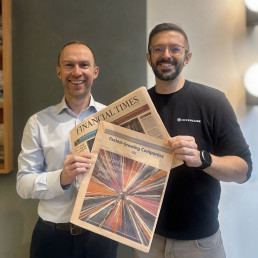
On this episode of the Hypercube Energy Podcast, Adam Sroka speaks with Ralph Johnson, Head of UK Business Development at Habitat Energy, about what separates strong battery performance on paper from real-world results and why availability is often the biggest lever for revenue.
Ralph shares his path through EDF Energy, Reactive Technologies and into battery optimisation at Habitat, where the team manages complex battery energy storage systems (BESS) across evolving power markets. He explains how optimisers combine software, traders and operational discipline to maximise revenue while protecting lifetime value, and why the hardest problems are often registrations, control systems and ensuring assets can access the most valuable services.
The conversation also explores how different market structures shape battery trading, what regulatory reforms and shorter settlement periods could mean for BESS operators, and why revenue certainty products such as floors, tolls and swaps are becoming more important as projects scale. Along the way, they dig into co-location, constraint risk, warranty design and why tight feedback loops between operations, trading and data science teams are essential for long-term performance.

Adam and Ralph cover:
Explore more with Habitat Energy
Visit Habitat Energy's website
Follow Habitat Energy on LinkedIn
Connect with Ralph Johnson on LinkedIn
CHAPTER MARKERS
Chapter markers
[00:45] Meet Ralph Johnson – Head of UK Business Development at Habitat
[03:55] What an optimiser really does for battery assets
[06:10] Proving the storage business case and why it matters for the transition
[08:35] Human capital as the limiting factor in energy delivery
[10:35] UK vs other markets: dispatch and market structure differences
[12:40] Shorter settlement periods and what they change for trading
[14:10] Nodal/zonal markets, constraints, and locational complexity
[16:55] Revenue certainty: floors, swaps, tolls, and why they’re growing
[19:45] Why availability is the biggest performance lever
[24:00] Granular control and keeping most of the site online during faults
[26:40] Onboarding where projects go wrong: registrations, metering, controls
[30:40] Designing for future services and avoiding avoidable downtime
[31:10] Warranty constraints, cycling limits, and rest periods
[35:45] Bridging ops, trading, and data science: why feedback loops matter
[40:10] Why co-location is accelerating in the UK
[42:50] Metering dispensations, MPANs, and separating counterparties
[44:30] Financing large projects: what needs to change next
TRANSCRIPT
Hypercube Podcast Transcript
Title: Energy asset optimisation: availability, dispatch and market revenue
Host: Adam Sroka
Guests: Ralph Johnson
Ralph (00:02)
You can’t earn money from an asset that is unavailable. But that uplift in performance, say 20 or 30, 40%, maybe even more depending on the asset class and some of the opportunities available to it.
Can be insignificant if you’ve had an asset offline for three months. That is the equivalent of that improvement. So availability is key to ensuring that your asset is always meeting its
Adam Sroka (00:45)
Hello and welcome back to the HyperCube podcast. I’m joined today by Ralph Johnson, who is head of UK Business Development at Habitat Energy. Ralph, thank you for joining us. Could you start by introducing yourself and Habitat for the audience, please?
Ralph (01:01)
Sure, happy to do so, Adam. And thanks very much for having me. So I’m Ralph Johnson. I’m Howard Tutte’s Head of Business Development for the UK. I recently celebrated my fifth anniversary here at the company. celebrate is one way of putting it. Acknowledge is maybe another way of putting it. But yes, I have been in the UK energy space for almost 18 years now, working across three major companies in the form of EDF Energy, Reactive Technologies and
currently Habitat and over that time my journey has taken me from B2B pricing in the early stages of my time at EDF to risk and finance on the renewable side into PPA pricing on the renewable offtake side at EDF and origination of those contracts and negotiation of actual PPA agreements. That gave me a really interesting, I think, feel for the energy market and a really broad base of expertise, I think.
But it was actually moving to a little energy tech startup like Reactive Technologies who focused on frequency and inertia measurements of various grids around the world using various forms of machine learning and AI techniques that really sort of opened my eyes to A, the world of batteries and of frequency ⁓ balance requirements, but also actually interestingly about managing imbalanced positions in the power market and how that can impact actually the stability of the grid. And that was really the natural.
transition into batteries for me over at Habitat. And here at Habitat, I am as head of business responsible for our strategic partnerships, looking obviously to get assets under management for Habitat to manage. I’ll tell you little bit more about what we do at Habitat in a second and also exploring new opportunities in that market, both in terms of technology, but also in terms of products and new markets we could enter into. So Habitat is a specialist optimizer focused on battery energy storage and renewables.
been around since about 2017 originally, but commercially active from 2019. We started in the UK, which was our core market. When I joined the company, there only 20 of us. And since then, we were acquired by Quinnbrook Infrastructure Partners in 2021, who own us outright themselves, an investor in the energy transition. And from there, we’ve grown out to offer services in Texas, in the US, and also in Australia. And as I said, looking at other markets we could potentially deploy our solution in.
about 150 of us now so it’s been 125 so a bit of a growth journey for us over the last five years.
Adam Sroka (03:23)
We’ve actually had Morgan Pair on the podcast a long time ago. Morgan and I worked together at Origami. yeah, shout out to Morgan for being an oldie timey HyperCube podcast guest actually. Check that one out if you’ve not. He’s over in Australia now and doing well I hope. guess the question I have to ask you, Ralph, is see when you’re like at the in-laws for Sunday dinner or you’re I don’t know, down the pub.
and someone asks you what does Habitat do? What do you say?
Ralph (03:55)
God, yeah, it’s always a really hard, the first question is what do you do? Like, God, I work in sales and that’s a terrible thing to say out loud to people. But yeah, it’s a really good question. as an optimizer, Habitat’s job is essentially to take control of an asset that we don’t own ⁓ and seek to both manage or maximize the value that an asset can earn through its trading potential. And the batteries themselves are just…
the singly most complex asset class, I think, to manage from when you look across the generation and supply side of the business, incredibly energy dense, incredibly quick to respond, can dispatch in both directions to charge and discharge and have a multitude of markets that they can enter and trade across. So when we try and, I guess, distill it down to exactly what we do, it is to take a very expensive, highly complex asset, treat it as if it was our own.
trade it across the various markets that are available to us and we do that via the software stack and technology stack we’ve built and through set of trading traders, 24 seven traders and ops teams to not just maximize the revenue for the client, but also maximize the lifetime value, protect that asset, make sure it is operating in the best possible way and as safely as possible.
Adam Sroka (05:14)
Yeah, it’s a good answer to what I think is not an easy question. think someone talked to a while back about the sector and it’s a very pragmatic view, but I quite like is that actually in that space, like if you are taking a renewable energy asset or a storage asset and you are making it more profitable, it’s being treated closer to optimally and you’re making it more profitable, then
Ralph (05:19)
You
Adam Sroka (05:43)
you are actually having an impact on the entirety of the kind of energy transition by making it more attractive for investment, making more follow on investment come along and make it a more attractive asset class. And I think like, you’ve worked in supply and finance and risk like across newables. How does your background shape how you communicate and think about all this?
Ralph (06:05)
Gosh, that is a remarkably difficult question to answer, I think actually it was a really interesting point you made at the beginning there about the role that Habitat plays. I think we were one of the relatively early starters in the battery space here in the UK. And I think the role that our co-founders feel we play in this industry is initially it’s to prove out the business case.
the energy storage, to show the capability it had when managed correctly to support all energy grids as they go through the energy transition. And I think from my own personal experience, having worked on the supply side and seeing, actually having lived through two big price shocks in 2008 and between 2021 and 2023 here, seeing
how reliant we are as a nation, also worldwide on gas price and gas generation and how shocks in that, how shocks to large thermal generation, generating nuclear power stations or our interconnection with European neighbors can have pretty seismic impacts on us and consumers in terms of the price they pay for energy.
And ultimately, the reason there is good value for batteries is because they provide that necessary balancing and opportunity for the system operator to manage the transition we’re seeing as we go from being a predominantly thermal-based generation stack here in the UK to a renewable-backed system. And that’s a really difficult thing to manage, where you’ve got intermittent renewable generation that’s completely dependent on weather to impact how it generates.
Proving how in the early days of Habitat how necessary storage was to that transition, the role it played in terms of moving that excess generation or intermittent generation from times it wasn’t needed to when it was, just became so interesting to me as something I wanted to be involved in, but became a real passion project, I think for us as a business, realising that we really want to help support the energy transition and this is probably the major asset class to do so in the future.
Adam Sroka (08:08)
Mm-hmm.
Ralph (08:09)
That’s the sort of academic answer. I think the interesting thing about thinking about value in the energy transition is probably what I’ve probably discovered to be the major driver of it. And it’s actually not, it is obviously the technology and the opportunity there, but you can’t do anything with that technology without the people, the right people. I’ve been quite lucky to work with some incredibly talented, incredibly driven, incredibly passionate, knowledgeable, smart people over my time.
Adam Sroka (08:29)
Thank
Ralph (08:34)
And it’s that human capital, I think, that is the major driver of this space. As I said, five years ago, when I joined the company Habitat, there wasn’t that much knowledge in this space. And it has been over these five years that knowledge has developed. We’re starting to see this asset class being in battery storage, being utilized more. We’re starting to see more complex use of that through co-location. But if you take, for example, the current issues we’re seeing in the UK with grid connection reform.
Adam Sroka (09:00)
Thank
Ralph (09:00)
Yes,
you could point to say that NESO, some of the challenges NESO has faced is not having enough good human capital or enough people to help manage that process with the hundreds and hundreds of assets that are in that queue. And similarly, you’re going to need a lot of incredibly talented, incredibly smart engineers to support you in connecting all those assets. And that is a major problem. having it or not having it is going to be one of the major success factors.
for the energy transition as a whole.
Adam Sroka (09:27)
I totally
agree. And like I said this all the time, the tech bits, the easy bit, like the, human side, getting the right people. And the, one of the things that really attracted me to energy as a space was the fact that I worked with some super genius people that could totally go and triple their salary working for like a big bank or, or like a fang type company, but they want to do something good and they want to like point their labor at the transition. Right. I think we’re starting to
see energy become sexy and like people even more so than it has been and like attract some of the good tech talent anyway from from kind of where we sit and I think it’s especially in the UK I mean does that extend elsewhere from what you’ve seen?
Ralph (10:14)
Yeah, I will will apologize a lot of my answers will be quite UK centric given that is where my main focus is. But we are, I think, quite lucky as a business in that we’re active in three out of probably the four most evolved storage markets, Germany being the other one, I suspect, at this stage. And that’s probably earlier on in its journey compared to Texas and Australia and the UK.
Adam Sroka (10:17)
Mm.
Ralph (10:35)
It’s been interesting to see the differences between those markets and the similarities and actually what we can learn from the differences between those markets and it’s probably pulling the curtain back a little bit for listeners. think Adam, when we first talked about doing this podcast, NESO hadn’t sent out its request to input for the reform national pricing consultation. And actually the comparison between those three markets now becomes incredibly more important because it’s really linked to some of the ideas that
via the RIMO consultation now the reform national pricing consultation, we’re seeing the UK start to genuinely think about. I think when we, there are definitely things that are better in those markets and things that are not done as well as here in the UK. So if I think about the massive obvious differences in Urquhart, well, sorry, in Texas run by Urquhart and Australia or the NEM especially run by AMO, you have centralized dispatch.
So those system operators ultimately define when an asset is discharged or charged. Whereas here in the UK, we have self-dispatch, which obviously gives someone like Habitat or an optimizer significantly more control over how their asset is used. What’s interesting there is the centralized dispatch approach has specific algorithms and dispatch protocols that are a lot more easy to forecast and anticipate than say the self-dispatch market that we work in here. So actually from
Adam Sroka (11:53)
Hmm.
Ralph (11:57)
from an automation and learning perspective, it’s actually easier to manage in those markets potentially. But actually, as we said, part of the reform national pricing conversation through hybrid dispatch, we might see the UK start to move into a portion of centralized dispatch here. So actually learning from what works in those areas could be incredibly important to what Habitat does in the UK. The other pieces around the sort of
granularity or cadence of trading. We have here in the UK focused on half hour trading settlement periods for gosh, as long as I’ve been in the industry. And we have for the first time started just as part of national pricing call for input. And Rima started to look at 15 minute or even five minute settlement granularity, which we have now in Australia and Texas already. And that’s been
Adam Sroka (12:25)
Hmm.
Ralph (12:47)
a really interesting actually and in Texas especially that’s only a really recent piece the RTC plus B transition that has happened over in Texas happened over the last few months. So in terms of learning actually learning from a habitat perspective how you develop your tools and change your tools for such a fundamental shift in the market is key. But also as an industry how you get all of the market participants to change their approach to a much shorter granularity. I think it’s gonna be a major challenge.
for the UK industry if we go down that route. And I say if, because obviously it’s not a given at this stage. But that is definitely something where we as the UK should be looking to and see that opportunity. There are, I guess, the obvious ones as well around zonal, nodal, and location, and national markets, one that was essentially discounted as part of the RIMA process here. We have a nationally dispatched and traded market here in the UK. But the…
Adam Sroka (13:33)
Hmm.
Ralph (13:43)
the zonal markets we have in Australia across NEM, ⁓ the Northern Territories and the Western markets, leads to some need to forecast constraint. But when we look at Texas, these nodal markets where you have to be able to forecast not just the constraints behind each node, but also how that affects the entire system is a much more complex optimization and forecasting problem that really requires a different approach. So you look at some of the differences in sophistication, that level of
Adam Sroka (14:02)
Mm-hmm.
Ralph (14:12)
technical sophistication there is much higher than here, but once again NESO potentially looking to move to locational procurement of ancillary services and also maybe even doing some locational trading. So suddenly being able to forecast those constraints here in the UK market become incredibly important and taking that learning from the other markets into the UK super important.
I’ve probably done the NESO in the UK a bit of a disservice. I ancillary services, I will say here in the UK, significantly more developed than anywhere else. The system operators done a great job in developing a toolkit to help them balance the system’s frequency and inertia requirements and also energy requirements. And that’s just opened up a significant opportunity for battery storage here in markets that they can trade across, but also significant complexity because those markets can be stacked. They can be traded differently.
Adam Sroka (14:41)
Yeah.
Ralph (15:01)
and you have to bid different prices into them at different stages. that is something that other storage markets we hope will learn from in terms of building out a toolkit that these incredibly ⁓ nimble assets can utilize to support grids in the future. I think it’s probably the major differences thinking it through. There’s always one I miss on this.
Adam Sroka (15:04)
No.
Ralph (15:22)
I’ll leave it at that. It’s not simple. I think, yeah, it is not simple, but it is, I think, fascinating to see how somewhere at Habitat where we have the operational capabilities are easily transferable between markets. So your systems to monitor state of health or what the asset is doing on a day by day basis and control those assets remotely are scalable across all markets. But interestingly, it’s those commercial
Adam Sroka (15:22)
It’s not simple. Yeah, it’s not simple.
Ralph (15:51)
differences you see between the markets, how the systems are operated that really drive the complexity and the challenges when trying to scale across the world as we are trying to do.
Adam Sroka (15:59)
Yeah, was like a not that long ago in my career, actually, that I really had the revelation that as a techie, you think about like, products and technologies being like code and databases and all this, but like someone brought me on the journey of well, no, a pricing mechanism or a PPA that is a technology, it’s a financial technology that enables certain behaviors and things. And when you think of it like that, you think, yeah, actually, complexity
has to manage both the technical, the physical constraints, but also the financial products and technical bits that enable a knit all this together. And then you can look at exactly what you’ve said. Can we cross-pollinate and take some of the best innovations where someone else has been first and bring that back here and take some of the best learnings.
Ralph (16:50)
Yeah, and I think your point on the financial instruments is a really good one, Adam. We’ve actually seen this, I’m sure this will be something we’ll dive into later in our conversation, but revenue certainty is becoming a significantly larger requirement across the industry because projects are getting bigger and to build big projects, asset owners tend not to look towards this equity. So they’re looking to do this with varying forms of
financial products that are out there to secure a portion of their revenue stack for a large portion of time. It’s really interesting seeing the different instruments that have been historically more successful or have started to materialize in those three markets we’re optimizing in. So a floor product here. So essentially an off-taker guaranteeing a minimum price, but ⁓ for a cost, for a fee.
but or an option premium, but while ⁓ allowing an asset to be merchant and the asset owner to secure all of the upside value linked to those assets has predominantly been the main tool here in the UK. that was because of the parties that were comfortable offering it. But interestingly, if we look, say, in the US, we’ve seen more structured products, so more stay ahead swaps and physical tolls, partly because of the value on offer that’s from those, but also just because that market in Texas especially has evolved that way. And those products are more numerous and
Adam Sroka (18:02)
Mm-hmm.
Ralph (18:11)
and better understood. And we’re starting to see some of that bleed back in over to the UK with some of these swaps, et cetera, becoming more available here. the virtual, we, Australia especially has been really focused on what has been called a virtual battery toll. So a completely financial instrument that fixes, that is nominated by a certain party who essentially secures value for the asset owner while being able to.
not physically nominate that volume, but just settled on a financial basis. That’s really interesting because that opens the doorway to bring in lot of different players into the market rather than it have to be a utility or a specific type of counterparty. We’ve seen a little bit in the UK as well, evolution of who provides the floors or some of those tolls that are materializing here as well. That’s a really important part for the market in this space because I
Adam Sroka (18:47)
Mm-hmm.
Ralph (19:02)
don’t think that need will go away in the short term. So finding a solution that allows the best solution with optimization and the revenue certainty that those asset owners require to bring in the financing they want is going to be fundamental to getting all of the assets we need built in the UK.
Adam Sroka (19:16)
a friend of mine who used to work with us at IPU actually did some consulting into one of the big utilities building a virtual battery and some of the conversations were just like fascinating and you can see the direction of travel. I think I’d like to get your head around what does it mean and how does it work and I guess it leads me into the question that I wanted to ask next was slight change of pace but with batteries like people obsess about the performance right and
That’s important, okay. But you’ve spoken a lot about some of the other characteristics that maybe don’t get as much attention, things like uptime and asset health. Why are these things critical? What do people misunderstand about them?
Ralph (19:54)
Yeah, it’s a great question, Adam. And I will once again caveat this, which I would love to be on the coalface of this every day. And I am now representing the good work that our trading and ops team do rather than I do myself. I ⁓ apologize to them in advance if I say anything wrong, but also if I myself am not as knowledgeable on this, bear with me. I think it’s a really interesting point. So availability, there’s a very simple point here.
You can’t earn money from an asset that is unavailable. So we always point to one of Habitat’s unique selling points, but certainly one of our differentiators as trading performance, our ability to outperform the sort of average earnings you’re seeing on batteries across the market on a continuous basis. But that uplift in performance, say 20 or 30, 40%, maybe even more depending on the asset class and some of the opportunities available to it.
Can be insignificant if you’ve had an asset offline for three months. That is the equivalent of that improvement. So availability is key to ensuring that your asset is always meeting its targets and for an asset owner especially earning the value given how much you have sunk into this, the cost you’ve sunk into an asset.
Availability is nuanced. So there’s this idea that not all periods of availability are equal. certain periods of ⁓ the day will be more valuable for an asset to be up or not, or certain times in a year will be more valuable ⁓ from a wholesale market trading perspective.
you want to ensure that your asset, if it is being scheduled for maintenance or if it is having issues, is not unavailable during those periods. And so being really dynamic and on the front foot with your scheduling,
your operational care of your asset is incredibly important. But even beyond that, when people talk about availability, they tend to think about availability of grid connection and of the actual active power that an asset can discharge. There’s also the point about an asset being available to enter all of the available markets to it. So there’s another nuance point about we have seen, especially here in the UK, new ancillary services being brought to the market. If you can’t enter
Adam Sroka (21:52)
you
Ralph (22:11)
the pockets of value that exist, you are going to be losing out and you’re not going to be making the best opportunity for your battery possible. It’s not just about ensuring that you’ve got your grid connection, all your inverters are working effectively. It’s about ensuring that you can enter all services, your assets configured correctly, you the right control system in place to manage all of those key pieces and you have an optimizer who can allow you to enter all of those markets.
So I think that the point on availability is highly nuanced. The biggest challenge the industry also has is none of this data is particularly transparent. I think it’s a major problem across the UK industry as a whole. There is some transparency, but it’s very difficult to actively identify whether an asset is fully available for all services, whether it’s fully available to dispatch all of its power. So.
you might look at an industry leaderboard and assume an asset is doing badly. Well, that asset may be unavailable and that has a massive impact on that too. So I think it does need to be taken more into consideration when thinking about the capabilities. And as a business, as Habitat, we’ve really found that because we’ve got so much operational experience, is something we’re really stuck. Well, we have been focusing on pretty intensely over the last three years in terms of really improving our capability. Because there’s also
Adam Sroka (23:03)
Mm-hmm.
Ralph (23:27)
An asset doesn’t have to be off or on. You can be partially available. One of the great things about the evolution of technology in this space has been the ability to take portions of your asset, a unit or a container offline, while keeping the majority of the asset still online. So if you do have an issue, you don’t have to lose all of your value for that period. But you have to have both the capability in that project. So a good control system, good integration.
good access to that granular data and the ability for an optimizer with the ability to act on that granular data as well.
Adam Sroka (24:02)
some amazing points there. think, yeah, interesting to think about the nuance in that word availability. And it’s actually probably, we need the next tier down of language to describe what we mean. Because, I mean, from like, from past experience, actually, a brand new market or brand new service tends to be quite lucrative for the first six to 12 months, right? Whilst the prices settle or maybe there’s, I remember the 17 pound a megawatt hour, like price that was just like money making machines for everyone.
And yeah, understanding that availability in advance and like I know from that’s where I cut my teeth was building market integrations for exactly that. And it’s really complicated, like figuring out what does this market need and how do I map the physical attributes of a battery to be able to do it? How do I forecast access? And if you discover that there’s an asset that would be good for this market, but it just can’t play.
You need enough lead time to order parts, make changes, like integrate, go through the outages or whatever. It’s a, it’s a really interesting problem space that I think many unsophisticated developers, maybe or operators probably more don’t haven’t bumped into yet. And an organization that Habitat been around long enough seen some of this stuff come and go. It lends a lot of value to, those people that kind of leveraging your experience in the space.
Ralph (25:26)
Yeah, and I think having to have, as a small independent when we started, having to have integrated with, yeah, it will be nine, I think, different types of control system, know, pretty much every major type of cell manufacturer that’s existed in the UK space. And similarly, the balance of plant equipment. It’s been a really good learning curve for the team. That experience is priceless in terms of, yeah, just understanding how different technologies work and the different issues you can face.
Adam Sroka (25:46)
to.
And you made a point about like access or the data isn’t, it’s not publicly available. mean, sometimes it’s not privately available to the actual owner of the asset as well. Like it’s the horror stories we hear of people that have bought the kit and they can’t get the OEM to give them the access they need. And it’s not like we’re still well, not the wild west, but it’s still early days in the best space. And I think people are learning all the time. We’re starting to see a little bit more unification and standards appear, but.
It’s by no means a settled, technologically it’s not settled yet. From all that and integrating to control systems, I guess where do things most often go wrong in your experience with onboarding and where do you find the issues?
Ralph (26:39)
It’s once again a very interesting question. I think there’s probably, once again, we talk about misunderstanding and nuance. Onboarding or good onboarding should start well ahead of your technical integration phase, almost at the design phase to some extent. As the assets that we’ve been onboarding have got larger and then
have moved from being distribution connected to transmission connected. Actually, I think one of the first things is getting your commercial registrations or your asset registered into the various markets and the correct metering setups on site well ahead of time. having someone to support you go through that commission process, understand what those timelines are is one thing. But also, we have gone through the process of understanding
what those registrations look like and helping clients go through, especially to your point, Adam, if you don’t have lots of experience in this, can be quite a daunting prospect. And this is the sort of thing that actually, if you don’t do well in advance, can seriously delay your commissioning and your ability to enter commercial operations. it ties into the availability point. Unavailability doesn’t just impact you in the prompt. So you might be missing a near term opportunity, but actually if an asset,
is just sitting there. It’s probably it’s not completely unique to batteries. And when I say batteries, lithium ion batteries, especially, but assets just sit there. If they’re just sitting there doing nothing, they’re still degrading. So their capacity is still reducing. So it’s not just affecting your ability to earn value and trade in the markets at that point, but it’s actually lowering the capacity you will have available to you to trade in the markets in the future as well. So the last thing an asset owner wants is to have an asset sat there doing nothing.
at any point, but especially before it’s even reached commercial operations. So that initial point is really important around getting your registrations aligned. Then secondly, the integration with the control system is really important too. So when we think about design stage, not just thinking about what services are available for an asset to participate in at this point, but thinking about what the future looks like as well. What in six months, 12 months, 18 months, depending on how long it’s taking you to build your battery,
or even two years if you’re thinking further ahead will be available for you to trade. If you look at NESO in the UK’s roadmap, again, we’ve got stability products coming to the market in theory in 2027. Those need different types of inverter, different ways of trading and bidding and managing of reactor power, for example. So doing the work upfront to ensure that you’re ready for that.
that your control system is to manage that, that your inverters, so you have the right inverters in place to manage that your system is set up correctly for that, means that when it comes to those services being introduced, you don’t have to do as much testing, you don’t have to take your asset offline for as long as possible. These are the things that people should really be considering upfront beforehand. And also things like sizing of your BMUs, how those are separated, how those are metered. Then we go into the, I guess, the real integration and
I think it’s been interesting to see, and Adam you were saying, where you cut your teeth originally, but it’s interesting to see how the market has evolved over time. We’re seeing more and more control system parties come into the market, different solutions. Those integrations differ by who you’re integrating with, not just from the control system side, but also the optimizer side. Some optimizers require, I will speak from Habitat’s perspective, more data. We want to take as much granular data as we can from the asset to ensure we can monitor it correctly.
Adam Sroka (29:54)
Mm-hmm.
Ralph (30:03)
that in many cases might involve a bespoke API integration or something like that. Once again, that is something you want to commence earlier rather than later in the process because the last thing you want to do is go live and realize that I can’t operate the sites as I want to or simultaneously that site can’t enter the services we want it to do because the control system wasn’t configured correctly. So running that testing as early as possible, testing the ability to stack services, testing the ability to respond in accordance to
Adam Sroka (30:12)
there.
Ralph (30:33)
service terms correctly. The more time you have to do this and the more in advance of commercial operations you do this the better.
Adam Sroka (30:39)
100%. Like it makes me think just the, in your opinion, does the industry as a whole really understand the kind of practicalities of the physical reality constraints and the warranties and like with like performance penalties coming in and the risks introduced and things like that. Like that is such a complicated physical kind of
financial picture. Do think people do have a good understanding of how it all comes together?
Ralph (31:12)
think there are varying understandings across the market. again, I think the more experienced asset owners probably have gone through various asset owners with a few batteries will have gone through different types of warranty, seen assets with different types of physical constraint and have gone have will have seen assets with different types of technology and different duration. So, but certainly I think there are pitfalls that new participants in the market will will and can fall into if they’re not aware of them. Warranty is a really interesting one. So
Flexibility of warranty is so important to maximizing the capabilities of your asset, both in terms of grid support and also in terms of trading. We’ve seen things like rest periods being introduced into warranties. So this need after doing a cycle to leave your asset to rest, that is really a function of temperature. ultimately, should if you are monitoring and managing temperature effectively, you shouldn’t need that in your warranty. should have it as a function of temperature. But the way the industry has evolved and
And maybe the way that some people control these assets or think about them has meant that those have come into warranties and potentially limited some of the trading capability. This idea of having a finite number of cycles that you use up in a year makes sense, but ideally you want to look at that on an annualised basis so that you can reserve cycles for periods of higher trading opportunity rather than be limited on a day by day basis to what you can do.
We found it’s been really helpful to talk to asset owners before they, ideally before they finalize their warranties or at least, know, to where they have the opportunity to discuss those warranties with cell providers to try and make them as flexible as possible. it’s interestingly, once again, you can have a very flexible warranty. You can have a brilliant ⁓ battery management system that balances cell state of charge perfectly.
Adam Sroka (32:45)
Hmm.
Ralph (33:05)
But actually the constraints of your system around that, the balance of plant around your system can massively impact that. I don’t think people, can get a fantastic new set of cells with cooling system, et cetera, that rebalance themselves on a unit basis, but maybe they don’t balance themselves across all units because of the equipment you’ve got joining them effectively. Meaning you still have to take your asset off once a month to allow cell rebalancing.
That is not ideal. Taking it off once a month is equivalent to taking your asset off about 4 % a year. So it’s 4 % of revenue, assuming even value for all of those periods that you’re losing on that project. That’s an optimization fee. So people need to be mindful of the impact, the actual other equipment they have on site alongside their cell technology and the warranties impacts you. Invertors, they react fast enough to allow you to
Adam Sroka (33:42)
you
Ralph (33:55)
enter ancillary services effectively or provide those ancillary services effectively. And the other one we’ve seen a lot of recently that’s really interesting is this concept of non-firm grid or active network management constraints. So to secure grid offers, some counterparties have taken offers that don’t secure dates, specific dates within a timeframe that they’re targeting, where they don’t have full visibility of how much connection
will be available to them at all times and when they will be updated on that, that can have an enormous knock on effect to the value of your asset. If you all of a sudden have your import capacity reduced significantly overnight where there’s great charging opportunities, you’re going to have to charge at a more expensive time later in the day. You really have to model out those constraints. And I don’t think the industry is particularly overfavored those at this stage because we haven’t seen that many of them. But actually, the system has, as we’re having more and more assets connected to the system as there’s
Adam Sroka (34:24)
Hmm.
Ralph (34:46)
different types of assets being connected to the system, we’re starting to see more and more of these cyber grid offers materialize and they will potentially have significant impact on certain assets. What I will say is spinning constraints the other way around, batteries are an incredibly dynamic asset class. So in theory are probably best placed to manage some of that constraint risk.
Adam Sroka (34:57)
.
I always think it’s like one of those magic eye pictures where you have to really zoom out to see the whole thing and what’s actually there. But in reality, when you speak to operations, then you speak to trading, and you speak to data science and analytics, they…
in a lot of places, they just talk totally different languages. It’s like they work in different businesses. And, but actually there’s so much rich information, especially in the operations side about some of the stuff you’re talking about. That’s like not in the optimization forecasts or whatever the what if the scenario planning, because no one thought to ask, why do you like, it sounds like you’ve kind of got a lot of that covered or you’ve, you’ve learned those lessons yourselves. Why is that so important?
Ralph (35:47)
We’re really lucky, I think, as a business that we have our in-house trading and ops team for 24 seven. We have our in-house data science team. have an in-house tech and a software team and onboarding team, all who work together on various projects. You have the guys who are at the coalface who see this on a day-to-day basis in trading and ops. They experience the markets firsthand. And then you have your, I guess, your expertise, your experts in mathematics and
I guess the algorithmic side of optimization. Bringing those two voices and different sets of experience together has been incredibly helpful for us. I ultimately, I guess the feedback loop helps us iterate and refine the models that we’re building ⁓ in terms of bridging the gap between the two worlds those two sets of teams face, the operational and almost the academic to some extent.
So you end up with a feedback loop that gives you continuous improvements. having people who see the world in different ways, explaining their experiences and then developing tools that fit those experiences. And not developing technology for the sake of it or platforms for the sake of developing, actually developing tools that are useful for the people who use them on desk, getting the voice of the people who will be using those on desk in the real world to feed in on a daily basis to
to those projects and developing those tools means you end up with something that’s genuinely useful and can be used on a practical basis. And those different sets of people think of things in different ways and pick up things that the others don’t. So actually having that constant touching of base between them means you develop something that’s holistic, that hopefully doesn’t leave any gaps, but ultimately can be updated relatively easy because everyone understands how it works and understands what the issues are. You sort of have end-to-end control of your technology stack and end-to-end understanding of what
what could go wrong, what has gone wrong, how you problem solve. It just leads to more, I guess, efficiency. We’ve also found actually as a business that exposing those teams to the client is also really helpful. So not just, you could say that the trader is the client of our data science and ops team, but ultimately our client, the asset owner is the ultimate client. So getting those teams for things like onboarding to understand the client’s desires, the way they think them.
Adam Sroka (38:01)
He’s the guy now.
Ralph (38:09)
Having that communication between us builds trust, helps us build understanding, has been incredibly valuable for us. Yeah, just helps everyone understand what the objectives are and what the challenges are for all the parties involved.
Adam Sroka (38:23)
I mean, like totally agree more than once we’ve been brought into really capable environments where they’ve got trading, they’ve got ops, they’ve got data science and everyone’s like a superstar professional. And actually they just, it’s the communication barrier. It’s the, do you get the data or the information from here into the hands of these people?
And like simple, even just running like workshops or rebuilding a UI. Like there’s a few times we’ve had to do this because being outsiders, kind of, can help kind of break open some of the political boundaries that might exist or whatever. And we get asked by like customers all the time, like, we’re going to just build an optimizer. you, can you shape it for us? And I’m like,
Okay, if you got lots and lots of money, and then they’re like, well, what do mean? I can see this thing online. And I’m like, I promise you, this is really hard. Like, there are good reasons why it takes a long time to do this well. It’s one of those like, areas that unless you’ve lived and breathed it and got the scars, it’s quite hard to really understand like how all those things, because you’re not just talking about different professionals, it’s different like personalities, the kind of people
the people that end up in these roles, the things they care about, their concerns.
Ralph (39:34)
I’d also say it’s been a great opportunity for personal development for some of the team here at Habitat, actually exposing your traders to that world to get them to get their hands dirtier on the data science basis or a tech integration basis. It just gives them a feeling of learning more and taking more responsibility and even possibly leading some of these teams. So that’s brilliant for the traders and simply for our data scientists getting more firsthand experience on the market. It’s just the way you keep people learning, developing.
enjoying what they’re doing. ⁓ I that that sort hybrid approach, I’ll find I’ll use the word hybrid far too often in general, but it really supports us, I think.
Adam Sroka (40:10)
Yeah, deeply believe in like the T shaped engineer where you are a deep domain specialist in your bit, but able to communicate and work in the areas of those around you so that you can really all contribute and work together. Talking to hybrid, was thinking actually like co-locations becoming more popular again, there’s a bit more momentum. Why do you think these kinds of environments, other than the obvious, right, good connection, why do you think these are becoming more popular?
Ralph (40:36)
Back on home turf now so I add this is one of the co-location was one of the main things I wanted to draw when I joined Habitat that I really wanted to focus on because you’re absolutely right. So grid connection is a really key point for certainly hybridised solar and storage, two incredibly complimentary technologies that can sit on the same grid connection and sweat that grid connection to the. ⁓
to maximise its value and the opportunity there. Solar in the UK probably only has a low factor of 11- 14%. There’s a lot of spare grid connection on the solar farm, if you put it there. But I think actually, once again, we go back to connection reformers, we’ve seen it harder and harder to get near term grid connection with good quality grid connection. The idea now of doubling up assets on the same grid becomes more economically viable for counterparties.
That’s certainly been one of the major drivers, but actually it’s almost as simple as also the evolution of the space. People have got more comfortable with batteries. Solar and wind were relatively really well known asset classes already. know, the offtake structures for them, the way they operate, very well understood, but batteries weren’t. So the idea of combining these two project types seemed a bit alien in the early days, especially when I joined Habitat. It took a lot to get people comfortable with what that operating model looked like.
Adam Sroka (41:37)
No.
Ralph (41:55)
Now the markets become more comfortable with the batteries, how they operate, the value they provide, the market’s getting more comfortable with putting those two asset classes together on the same grid connection. There’s also now, certainly for Habitat, we have two operational co-located solar and storage assets in Australia. We’re taking our first co-located assets live in the UK, hopefully in the next month. Getting operational data ourselves has proven out a lot of the modeling we did previously around the impact on
the individual value of each of those assets by co-locating those units. So there is just harder data that you can point to now. What’s also helped is that lenders now are comfortable looking at these projects as combined units rather than separate assets as well. So looking at a combined solar and a combined storage site rather than two separate items means you can look at the
Adam Sroka (42:33)
I that helps.
Ralph (42:51)
CFD, the RO, the corporate PPA you get on your solar as a fixed revenue stream backing up the funding for an entire project, allowing you to do take the battery merchant, allow it to maximize its value and add value to you as the asset owner and get the target IRRs or the target objectives you have for that project. So that’s been a big change. I’ll also say that
Things around dispensation process for these also led to standardization. So the metering dispensation process that allowed you to separate M-Pans behind the grid connection, single grid connection point used to be less well known, longer process. It’s become a lot more standardized. So actually being able to have two separate M-Pans behind the same grid connection point that you can put separate contracts on has opened up the co-located world to more options. So you can now have the best optimizer on your battery.
can have the best PPA offtake on your solo, you can still have both of those and really get the best result for the project, whereas previously you had to rely on one counterparty doing both and that may not have been the best solution for you or allowed you to maximise the value for the project. So there’s definitely been movement in the right direction, I’m really glad to see that there’s more and more interesting co-location projects coming to market now. It will be a dream to fully co-opt, you know, there’s co-optimisation and then there’s
pure optimization of a co-located project that I hope we get to a fully merchant solar and battery site that are doing exactly the right things together at the right times would be really interesting.
Adam Sroka (44:26)
That is interesting. Yeah, I just have to think that one through that will give me some homework to play around with the. ⁓ Yeah. Get the whiteboard out. Do you think then because we’ve touched on this a bit, but do you think the financial instruments, the kind of funding is there to support that? And if not, what do you think needs to change to make that easier?
Ralph (44:31)
Take it offline Adam,
think that’s a really, once again, it’s a really good question. Yes, but as we were saying earlier in the conversation, as assets have got bigger, building projects off of equity alone has become more challenging or maybe less appealing. So a lot of asset owners, especially for these larger projects, mean, have the Thoughtmarsh project at 1.4 gigawatts, we’ve seen the announcement about the debt financing for that project.
bringing in debt on an individual lender basis or a syndication basis has become more of a preferred approach with finding with asset owners. And those lenders to lend at the sort of gearing levels that asset owners would like and at the cost that they would like tend to want to have a large portion of that revenue secured by some sort of revenue certainty product. And that has been.
I guess some impact on the market and how it’s done. So it has meant that for these larger projects, they need to have a floor or a toll. ⁓ The toll itself locks out the asset owner from a significant part of the upside, but does give them a long-term fixed revenue stream. That can be acceptable for someone, but we tend to see counterparties with portfolios looking at that more than say an individual asset. And a lot of people in buildings actually really believe in the upside and the…
and the support that these assets can provide the grid. So that may not be their favored method. And on the floor side, we’re certainly seeing that there’s probably less liquidity in that market than there used to be. And that does raise some concerns for the market because if that form of revenue certainty is going to be a requirement to get projects away, then if there’s less of it, you’re going to get less projects away.
So it is something the industry needs to think about. There’s probably really two solutions then on the side. is, can the industry work with lenders to get them comfortable with different approaches? Or can we find other sources of these sorts of revenue certainty products? And I think, or it could be a combination of the two. There are already and have been in existence for years forward hedging, well ways of hedging risk forwards in the wholesale trading market.
Adam Sroka (46:40)
Hmm.
Ralph (47:03)
And that is still available for batteries. probably just doesn’t have the seven year tenner or 10 year tenner that people are looking for. It tends to be traded up to the liquid horizon of the trading market or just a bit further. Can something be built with that, be it a data head swap or actual just forward hedging done on a physical basis to get lenders comfortable with the risk of returns for these assets and maybe remove some of that requirement for a floor or
Are there other parties we can bring into this market who are comfortable with the market risk around wholesale price that they will offer floors and maybe not offer optimization services, offer floors on a financial basis. And we’ve seen this with some insurers coming to the market already in the UK space. So looking to build out that because ultimately those parties can charge for providing that product. There is an opportunity for them there and it may fit the market niche that we require.
The problem we’ve had is ultimately lenders up until this point haven’t had to think or become too creative and look at alternative options because the liquidity has been there for them. As we move forward, we might see that liquidity reduce and that becomes a problem that the industry needs to start tackling to bring in that investment externally.
It’s that I think there’s a there’s some really interesting points around, you know, tolling providers, for example, might be utilizing those tolls for different reasons for risk management reasons for their own internal portfolios, which doesn’t really affect the asset owner, they’re getting the tolling price. But ultimately, does it mean that they respond to the price signals that NESO are sending out? Or are they managing those assets in a different way to manage their own risk? And that might have a knock on effect that the industry hasn’t considered. ⁓
So I think there’s still a lot of questions to be asked. think if we want to meet the energy transition, a solution for this problem needs to be found. If we want to build out the storage that’s required to allow us to deploy the renewables in this space, we have to find a solution for this. And it’s either getting the market comfortable with merchants or different structures, lend the market comfortable with that, or it is finding another tradable product or financial product that does that.
Adam Sroka (49:11)
My only prediction is that 18 months it will be totally different.
Ralph (49:15)
It always is. Every 18 months it’s always totally different. mean,
we have the, we have various regulatory reforms ongoing. I think that’s the really key piece about being nimble and being able to adapt to that. And the industry has done, the successful players in this industry have been the ones who have been able to adapt that way.
Adam Sroka (49:36)
So right before we go, any hot takes? Any heard it here first or something that we can put in the downloadable content, the subscriber only. ⁓
Ralph (49:41)
⁓
That is, I would much prefer to do that in person with people, I think. So I would say if anyone wants any hot takes, they are more than welcome to come and find us at the Energy Storage Summit in London on the 24th and 25th. Or reach out on LinkedIn or our websites, which is www.habitat.energy. There’s a contact mailbox there that they can reach out to. More than happy to give people my…
Completely unabridged, unfiltered hot takes in person.
Adam Sroka (50:15)
No, I love it. Well, I always ask everyone
before they go if there’s anything they want to promote or plug, but you’re at Energy Stories Summit, you’ve got the website, the LinkedIn. It’s been an absolute pleasure having you on Ralph. So, yeah, I’ll be down there next week. Look forward to seeing you there. Thanks once again for coming on the show. I wish you and the team all the best as you continue to grow.
Ralph (50:36)
Thanks for watching, it’s been really good fun. Apologies if we went on too many tangents, but it was a really conversation.
Adam Sroka (50:42)
no
Adam Sroka (50:44)
Thank you once again for listening to the Hypercube Energy podcast. As always, if you have any feedback or comments or you want to get involved, please get in touch. And if you want to find out more about what’s happening in data and AI across the energy sector, please join the Beyond Energy community and I look forward to speaking to you soon.
Do you have something to say about Energy and Data?
We always welcome new perspectives from leaders in the energy, trading and utilities sectors. If you fancy being a guest on the Hypercube podcast, drop us a message below and our team will be in touch.


