

Your home on autopilot: smart charging, flexibility and trust

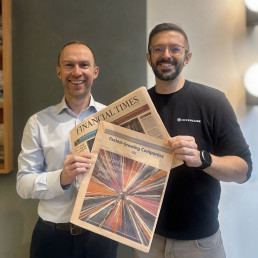
On this episode of the Hypercube Energy Podcast, Adam Sroka speaks with Jack Fielder, Chief Commercial Officer at myenergi about how home energy is evolving and what it takes to turn connected devices into a platform that works for customers and the grid.

Jack reflects on his move from engineering and strategy consulting into myenergi, and how the business has grown over its first ten years into a manufacturer of home energy devices with more than 300,000 connected households worldwide. He explains how myenergi’s EV chargers, batteries and solar devices laid the foundations for a new digital services business focused on optimisation, connectivity and home energy flexibility.

The conversation looks at interoperability in mixed-device homes, how myenergi’s GridPay proposition pays customers for automated flexibility, and why trust is everything as smart charging moves into the mass market. Jack also discusses V2G, the UK’s new licensing regime for flexibility providers and myenergi’s international expansion, as well as the importance of strong data foundations and the company’s commitment to creating local jobs and skills in Grimsby.

LISTEN ON SPOTIFYLISTEN ON APPLEWATCH ON YOUTUBE

Adam and Jack discuss:

  • Building a digital services business on connected hardware
  • Interoperability and the challenge of mixed-device homes
  • How GridPay rewards customers for flexibility
  • Building trust as smart charging reaches the mass market
  • V2G, international growth and the future connected home

Explore more:

Connect with Jack Fielder on LinkedIn

Visit myenergi's website

The Hypercube Energy Podcast sits down with leaders in the energy and utilities sectors to explore how data analytics can help businesses make smarter decisions and accelerate business growth.

CHAPTER MARKERS

Chapter markers

[00:00] Meet Jack Fielder – Chief Commercial Officer at myenergi
[01:08] From engineering and consulting to myenergi
[02:27] Ten years of myenergi
[03:29] Launching digital services
[05:58] Connected homes and interoperability
[08:53] Working with third-party devices
[11:17] Do homeowners understand flexibility?
[12:53] Sharing data with DNOs
[14:33] The fully electrified home of the future
[18:24] How GridPay works
[19:46] Building customer trust
[23:13] Early adopters and the mass market
[26:28] What’s next: batteries and V2G
[28:08] Licensing and regulating flexibility
[30:16] The digital services roadmap
[32:01] Building strong data foundations
[33:57] Working with Hypercube
[36:21] Investing in Grimsby
[38:22] International expansion
[41:02] The future of the connected home


TRANSCRIPT

Hypercube Podcast Transcript

Title: Your home on autopilot: smart charging, flexibility and trust

Host: Adam Sroka
Guest: Jack Fielder

Adam (00:00)
Hello and welcome back to the HyperQ podcast. I’m joined by Jack Fielder today, who is Chief Commercial Officer at MyEnergy. Jack, thanks for joining us. How are you?
Jack Fielder (00:29)
Very good, thanks, Adam. Thank you for having me.
Adam (00:31)
Yeah, I guess for people that aren’t aware of you, myenergi, do you want to give a brief intro and a a tour of what you’re all about?
Jack Fielder (00:38)
Absolutely. So I’ll I’ll start with Myenergi. Myenergi is a manufacturer of home energy management devices. So we have an EV charger called Zapy, a battery storage system called Libby, and a solar power diverter called EDI, all working together seamlessly within our home energy management system, optimizing our customers’ energy, helping them to save on their costs, save on their carbon, and increasingly helping them to earn money from that.
that home energy ecosystem as well.
Adam (01:08)
Excellent. And you started as an engineer and sort of moved into strategy consulting before joining Minor G? Like what what made you kind of take the step into a company like that?
Jack Fielder (01:22)
Yeah, it was it was very fortuitous I’d say when uh the Minergy opportunity came up for me around five and a half years ago. I’d um yeah, as you said, I did engineering at university, very focused on science and maths and all of those sorts of things. So I went into strategy consulting to try and get some uh a slightly more broader kind of commercial view on the world, working out how this all this technology I understood actually interacted with the the real world and with customers and
that was great, but I wanted to move back into well, something a bit more technical. I wanted to move into a business that was really doing something, had purpose, was driving forward, especially the the kind of clean energy and the new energy agenda. Um and I really wanted to work at a startup as well, something that had that kind of young, agile, exciting feel to it. Um and
Just at the time I was looking, I met Lee and Jordan, the two co-founders of Myenergi, and I guess the rest is history.
Adam (02:27)
It’s um yeah, it’s a really interesting business because it’s been going coming up to ten years now, but gone on a significant transition recently.
Jack Fielder (02:36)
Yeah, absolutely. It’s our tenth anniversary this year. It’s a it’s a big one, big one for business. And yeah, it’s been a journey, right? We’ve been going for ten years, there’s been a huge amount of growth. we have had periods where it’s been pretty challenging as well. I think like the industry that we operate within has been challenging at points over the last five years or so. but
We’ve
probably had a bit of a reset, I’d say, over the last couple of years and things are looking really good at the moment. the business is going well, our products are performing well, we’ve launched a few new products recently, we’ve got lots of new products in the pipeline over the next few years. And I guess for me in particular, I guess kicked off and took over a new business unit within
Adam (03:23)
Yeah.
Jack Fielder (03:23)
the business which we call digital services, um, which has been really, really exciting.
Adam (03:29)
Yeah, and that’s what I was gonna lean on to was like what prompted you to do that? And explain a little bit about what it is because um but again, like minor G traditional kind of quite advanced manufacturing and distribution, like building real things, like proper engineers, and then you’re now on the warpath for digital services, which is more my bag, right where I live. And I just think it’s it’s interesting. What’s prompted that kind of change or that direction?
Jack Fielder (03:57)
it’s been quite organic, I would say. So like the vision for the business when Lee and Jordan set it up has always been to have this home energy management ecosystem and to have households participating in the energy system. Um but you had to start we had to start with hardware. it’s how customers get access to the energy system and it’s how we get kind of
automated access as well to really managing customers’ energy. So we started with hardware and and we obviously we also needed to scale up our our user base. We’ve got three hundred thousand, three hundred and fifty thousand connected households across the world now. and I can only do this this digital services thing with those households, with those connected households. but yeah we launched an app quite early on.
In the business and it allow customers to visualize their energy, optimize their energy. we launched an API platform a few years ago that we’ve been massively expanding, which helps customers to connect their products into different propositions and ecosystems, and is now at a stage where, at least for our EV charger in the UK, it’s the most connected charger on the market. So if you buy a Zappi,
You have access to every single smart energy tariff that’s on the market, which is something that none of our competitors have. And that’s because we’ve really focused on that API platform and connectivity platform. And that was, I guess, the start, I think, of the digital services thing, saying, okay, this is something as a business we need to really focus on, really expand on now. but I think what what really kicked it off probably two to three years ago now.
is
the launch of our gridpay proposition, which I can go into in a bit more detail, but at a high level, it enables customers to earn money from helping to balance the grid in a very automated way.
Adam (05:58)
yeah, I would think the or I I would hope the audience of this podcast are no strangers to me waffling about virtual power plants and the the dream of connected homes. But it’s not easy. Like so many places where I’ve done it, there’s a big sort of sigh of like, oh exhaustion when they’re like I’ve got to connect to like millions of other hardware manufacturers
specified APIs and systems and approaches and protocols. There’s the standards are pretty bad, like or
Jack Fielder (06:30)
Mm-hmm.
Adam (06:30)
if at all. And it’s not even like there’s barrier to entry. There’s nothing to enter. It’s just hard. Like and
Jack Fielder (06:36)
Yeah.
Adam (06:37)
I think your point around 350,000 connected homes, being the manufacturer gives you such a huge advantage actually of like, well, you’ve got a lot more you’ve the locus of control is a lot closer to you. Now it allows you to do some really interesting stuff.
Jack Fielder (06:52)
Yeah, absolutely. It’s uh it’s a massive advantage. and I guess y you could also view it as therefore it’s an obligation, I guess, on us as a manufacturer and like we’re we’re really investing now in the customer experience. Like once you buy one of our products, that digital customer experience and making sure that you make the most of of those those products that you purchased, and they’re fully optimised, I guess I see it to some extent as an obligation that
We have a service like this that enables customers to really participate and really earn from the the flexibility that those products can produce. But but yeah, it’s i I I guess one one thing to add actually is from our side there’s then the the market integration piece.
Adam (07:33)
Yeah.
Jack Fielder (07:34)
So like in GB
We have a really, really advanced flexibility market and a really open and interoperable flexibility market. but there are still lots of different markets that you need to integrate with and and work across, and there will be more, and that would be a good thing. and there’s there’s a kind of an integration layer there that that exists that’s complex. And actually I’m sure we might get onto it at some point, but the internationalization of this as well. Like we operate across Europe, across Australia and New Zealand.
that’s another kind of layer of interoperability and integrations complexity that even though we’ve got our own devices, we’re gonna have to deal with that side of things as well.
Adam (08:15)
Yeah, but it’s even like even Australia, that’s not that’s
not one market. That’s like
Jack Fielder (08:18)
Mm. Yeah.
Adam (08:20)
yeah, that’s a big disjointed, like very complicated and Yeah, you’ve got uh control over the the hardware side at least. I’m interested to hear like you will be moving the rise of the smart home and connected homes, right? And the people having mixtures of kit, like how are you tackling that problem where
It’s maybe not your E V charger. It’s it’s like someone’s already got solar panels and things and you start thinking like my house, right? We just came with solar panels. I don’t know, I don’t even know who made who built them. how are you facing that hurdle?
Jack Fielder (08:53)
Yeah, it’s um it’s not easy to get right. We’ve um we’ve always tried to approach things in an agnostic kind of device agnostic or brand agnostic way as possible. So especially when it comes to solar, working alongside an existing solar P V system, an existing battery storage system. our devices do that inherently, so it’s relatively technical but you can
you can monitor those devices using a C T clamp and uh therefore our system can read the energy flows from those devices. So we’re not necessarily controlling the third party battery system, but we’re responding accordingly to that third party battery system and making sure that we can kind of limit export if you want to limit export or just making sure that you’re maximizing that that usage of solar. But I guess if you really want
things to work excellently together and properly optimise your system. you need control over those devices as well as just telemetry and and readings coming from them. So obviously I would say that having the ecosystem of myenergi products is the the best way to do this, right? Because you can you can know when you buy them that they will just work nicely together out of the box, that your E V charger is not going to drain your battery and
they’ll just work in lockstep with each other. But I think we are at Myergy pragmatic enough to know that that isn’t gonna be every single home, right? It’s gonna be a hugely varied set of like households in terms of brands and products that they offer. So we don’t do it today, but we absolutely will in the future enable customers to integrate third-party products, so non-Minergy products, into the Myenergi
home energy management ecosystem, which will mean that we’ll somehow have to deal then with that complexity of the interoperability and integrations layer. Hopefully the standards get a bit better before then, but again, we’re not naive, we know that they’re not going to be there and there’s going to be a legacy base of products that are on who knows what kind of protocols, some properly proprietary ones, some like semi open standards that we’ll need to work through.
Adam (11:13)
we still need to figure out smart meters give us it’s uh it’s only
Jack Fielder (11:16)
Mm.
Adam (11:17)
been like years one thing that like when talk about that uh like because it’s the world we’re in but do the homeowners that aren’t energy nerds get it like do they really get the
the value that their home has on the grid, the the challenges of coordinating a connected home, like and the opportunities for them.
Jack Fielder (11:39)
No. Definitely not. Like they’re they’re absolutely not, right? It’s it’s so it’s really complex. Like, yeah,
Adam (11:45)
Like explain to you.
Jack Fielder (11:47)
e even people in our industry, who do this day in, day out, I think lots of people don’t really get it and don’t really get the opportunity and the size of the opportunity. And to be honest, like my view is that we can’t and shouldn’t expect the typical customer, typical mass market customer to get it.
They need to understand there are propositions out there that enable them to achieve the outcomes that they want, like in particular, what are the ways that a typical customer can lower their energy bills, getting the right products and the right systems and the right tariff and the right propositions over the top. and I definitely see it as our job at Myenergi to educate customers on the right setup for them and the right kind of
products and propositions and through GridPay our flexibility service, trying to make sure that they get the most out of that. But I don’t think it’s the right thing even to expect customers to understand what is really happening, that coordination layer and all of the various energy markets that are being traded into in the background. I don’t think that’s necessarily the right answer.
Adam (12:53)
What about other way around? Like do do you do do you interact much with grid or DNOs on like what you’re learning, what you’re seeing? ‘Cause you must have a lot of really interesting data and insights on how the what’s happening at the kind of c like demand end of the grid.
Jack Fielder (13:09)
Yeah, we do to some extent, but definitely not enough. We’ve got a huge amount of data, right? I think the especially at the the DNOs and the kind of low voltage networks level, the kind of the the feeders into people’s homes, it’s getting better I think, the monitoring and telemetry from DNOs, but historically they’ve had very, very little understanding of what’s going, like what kind of voltages are doing and frequencies are doing at at that level.
And
That’s something that at myenergi we’ve got, we measure that for every single household. We know their voltage, how it varies on a minute by minute basis, frequency how it varies, we’ve got kind of that data historically and yeah, we absolutely could help DNOs. It’s not something that we’ve we’ve really driven probably as much as we should, but nor have the DNOs, I guess, reached
Adam (13:58)
Yeah.
Jack Fielder (13:58)
out to us. So if if any are listening, please come.
Reach out to me and we can have that conversation, ’cause yeah, there’s there’s definitely something there.
Adam (14:06)
feel like another consultation coming on. But I like
Jack Fielder (14:08)
Mm.
Adam (14:09)
I do think it’s a great opportunity. tricky because the data is so sensitive, but there’s so much of it and it’s so valuable. There’s so surely something can be done at that that DNA level, I would think.
Jack Fielder (14:19)
Yeah, especially if you if you aggregate it down to the like the low voltage feeder level or or something just to get that like neighbourhood view what’s happening at at that sort of level. I’m sure there’s a balance that could be could be struck there.
Adam (14:33)
so what’s the end state, I guess, like as millions more homes kind of come online and bring all this stuff on, this will start to become the norm, the electrification of transport, all that, like eventually we’re all kind of on this path now. How does like an a mind you like platform help manage that distributed energy at scale?
Jack Fielder (14:54)
So I I guess you could probably talk about it in two layers. So you could think about the like the individual household and how it manages for the individual household and then the system, right, the energy system and how it helps manage it at at that level. I guess if you focus on the individual household, there are a few key elements to what what I would say is needed for the
the household of the future and and my view of the household of the future is they will have multiple energy assets. So like if you fast forward it enough, every household’s gonna have an EV charger, maybe two. They will be a vehicle to grid or vehicle to X EV charger. So then label your vehicle to both charge and discharge from the house and into the house.
They’ll have solar, they’ll have a battery storage system, they’ll have a heat pump or some sort of electrified heating system. Like it’ll be a fully electrified household. that is quite clearly, I think, the the future that we’re all heading towards. and I think it’s the right answer, it’s the right future. I think that you will have more and more dynamic tariffs or kind of
interesting
propositions where at different times of day there’ll be different rates of import pricing, different rates of export pricing. And exactly what that looks like, I don’t know. I think it’ll be hugely varied and there’ll be loads of options on the market as well. There’ll be this provider has this sort of structure, that provider has that structure. And then you’ll have the customer sitting in the middle with this incredibly complex system.
incredibly complex energy system as well and tariff structure. and it will be far, far too complex for even the most dedicated of energy nerds to manually orchestrate, right? Like it’s just too many variables the time period will come down. Like in Australia, I think is is it a two minute like settlement period they have? Is it five minute
Adam (16:50)
I have a thing. Yeah.
Jack Fielder (16:52)
fine five minutes in Australia? No one’s doing that manually.
Um even half hourly, right? Move them half hourly in the UK. No one’s doing that manually. so you’re gonna need a fully automated optimization platform that understands what you need as a customer, makes sure that your vehicle’s charged if you need it to, your house has the right temperature, and is just optimizing for you, right? Optimising for most customers it’ll be costs, like minimizing their energy costs, maximizing their earnings.
But some customers might want to optimise for carbon, might want to maximise their like self consumption from solar. and the system just needs to do it for you in as automated a way as possible and give you the confidence and the trust that it’s acting in your best interest and you’re getting the best outcomes.
Adam (17:36)
I h wholly agree. That is like that’s the vision. And it and it’s like the
Jack Fielder (17:39)
That’s the vision. Yeah.
Adam (17:41)
technology does exist to do it on the software side.
Jack Fielder (17:43)
Yeah, yeah,
Adam (17:44)
it is super clever, it’s not anything super new, it’s existed,
Jack Fielder (17:47)
Mm-hmm.
Adam (17:47)
it’s understood, it’s hard to build. Um
Jack Fielder (17:49)
It did.
Adam (17:52)
but the bit that I think’s harder is doing exactly what you said like earlier,
How do I consume that as the normal homeowner? How do I take all that and what what do I see in practice? Both today, like what say the digital services, business unit, the application, you’re doing demand side flexibility already, right?
Jack Fielder (18:11)
Mm-hmm. Yeah.
Adam (18:12)
so how is how do I receive that today? And then as it gets more weird and wonderful, do you have uh thoughts? Have you sketched out like where’s the line? Where do you stop showing people what’s going on? Sort of.
Jack Fielder (18:24)
Yeah, so that’s a good question. So we’ve we’ve got our like taking grid flexibility specifically, we have our grid flexibility proposition. It’s called grid pay. the premise of it is that it’s a really simple sign up process. We mention it to customers in the app, say, Would you like to have both an kind of an automated smart charging products? You no longer need to set schedules, you just tell us what you want and we will optimise for you.
And
you will earn money from doing so and we’ll pay you every month. At the moment we’ve been paying ten pounds a month to customers. In March we paid twenty pounds a month to customers for participating in this. and that’s it, right? That’s the the proposition. Um in my in my mind it’s a better charging experience.
Adam (19:08)
So you’re just aggregating all
that revenue and savings across everyone, no matter what their home actually did.
Jack Fielder (19:15)
We are trading those customers that
Adam (19:18)
Yeah.
Jack Fielder (19:19)
that are participating into a variety of markets, in particular into wholesale markets um and accessing wholesale pricing for them and making sure we’re load shifting and turning
Adam (19:31)
Mm-hmm.
Jack Fielder (19:32)
down their load when the energy price is particularly high and paying them for doing so. And yeah, absolutely, we aggregate that up across customers and then and then pay them for participation.
Adam (19:45)
like that because I think
Jack Fielder (19:45)
yeah.
Adam (19:46)
it’s like the alternative is so much more complicated to consume as the user. Like just and the kind of thread I’m trying to tug on is like, how do you build trust in this? Because I think this is a domain where like a
company I work with before did a load of research and they found that like a lot of homeowners don’t trust the energy companies, they don’t trust the energy system, the domain. It’s too complicated. They don’t understand it. They see a massive standing charge. They don’t know what that’s for. Like it’s hard, right? And then you’re s and then you’ve got these businesses saying, Oh, let me control the stuff in your house and that gets their heckles up. So like I think the big mountain that like myenergi has to climb
is on trust and adoption of the homeowner. And there’s a there’s such a fine balance on like, okay, well, transparency, but actually like showing stuff people stuff that’s like quantum mechanics, that’s super duper hard to understand. It’s not going to build any trust. Whereas I like that approach to say, look, just believe in us, like you will be paid and there was real money or land. That’s the end of it. And I yeah.
Jack Fielder (20:49)
I th I think or tr trust is always, like in any domain, built up over a period of time of continually delivering against what you are proposing or delivering against, right? And in this instance, especially when it comes to smart charging, the customer is trusting you with with two things. One is will my car be charged to the level I expect when I expect it to? And I I always say with smart charging, like you
literally lose that trust overnight with a customer is if you miss a charge. Charging often happens overnight, right? And if you miss that, you lose it. And and We have had it, like being transparent, especially in the early days of grid pay, there were some bugs in the system and some charges missed, and those customers leave overnight. They leave the proposition and that’s it and it’s really difficult to win them back. that was the early days, like the
Quality is much higher. We know that that’s such a fundamental promise to our customers and we need to meet it every single time. And then the second thing they trust you with is to make sure that their energy bill’s not going to go up from all of this smart charging that you’re doing. If you are trying to make the most of having an EV charger in the UK, you should switch to an overnight tariff. That is the
the one way you can make the biggest difference once you get an EV charger, you can probably save six hundred pounds a year, most customers, just from switching to a two-rate overnight tariff with an off-peak window. For that kind of customer, obviously they’re charging, you want to do it in that off-peak window, right? You do not go outside of that off-peak window because the energy costs three times, four times as much once you go outside of that window. So again, consistently delivering against that through the experience.
consistently paying them for participating as well. And I think it’s only through that consistency that you you get the customer’s trust and I guess they then maybe allow you to control a bit more of their household. You say, would you like us to also put your battery system into this, into grid pay, into the proposition. and over time, that I think again, if we’re talking about a longer time period, as long as the products are good
And they work and the propositions are good and they work for customers, then hopefully customers build up that
that
Adam (23:12)
Yeah.
Jack Fielder (23:12)
level of trust.
Adam (23:13)
I guess h I mean
Is there a challenge? Does does the product have to be good or does it just have to be improving? Right? Because there are some people that get it and like just want to see, just want to chip in and be involved. And as long as and they’re like other doctors that just understand this this might be a bit up and down at the start. Like loads of my friends would just be like, Yeah, whatever. They’ve been talking about their like smart charging for like a decade and they do their own reports on Facebook and stuff. And those people
probably don’t care if it’s not
Jack Fielder (23:43)
Uh
Adam (23:44)
perfect, but as long as it’s getting better, I think you you do because eventually like their friends of their friends are like, wow, no, I know someone who who swears by by energy and blah blah blah
Jack Fielder (23:53)
the mass that’s not the mass market though, is it? I think I I I agree with you, like I mean my energy’s got a huge early adopter customer base
Adam (24:00)
Yeah.
Jack Fielder (24:00)
and and I agree they it in some ways they’re more difficult because they’ve got used to really kind of manually controlling things and they’ve set it up to work exactly as they want it to. And actually a kind of the smart charging proposition is quite it’s quite simple in a way, and it’s almost too too simple and there’s not enough information. and that kind of
turns those customers off. but you’re right, there’s there’s this kind of cohort that want to try the new thing and that’s great. But we are, I mean like with EV adoption, we are absolutely into like early majority stage now. Um like probably veering into mass market territory to be honest. And those customers do not have the patience for beta propositions and things that break and don’t work, especially if you’re
If you’re transitioning from a like petrol ice vehicle to an EV, and I’ve got family members, right, that have done this, and if the EV charging, whether it’s the public or at home, goes wrong, those people find it so frustrating and it all comes kind of back to like this technology isn’t ready yet, and like preferred having a petrol vehicle. So you knew what you’re doing, you just like
went to the station and you filled it up with gas and that’s it, right? But I do think that for the technology to really work for the mass market, which is there, as you say now, it needs to just work every time. And I think like we’ve got there with like standard E V charging, scheduled EV charging. It does. It’s fully consistent. It works every time. It’s like super deterministic, reliable. That’s it.
But smart charging, yeah, like it’s it’s a newer thing, right? It’s a it’s a newer proposition and way of interacting and I think it’s great and we’ve as you said earlier, like we’ve got the benefit that we have our own devices to control. We
Adam (25:55)
Yeah.
Jack Fielder (25:56)
know we’ve got that full like API, like orchestration and connectivity layer.
Internally, we’ve got full control over it, which means we can have a super reliable proposition. That’s difficult if you’re working with a bunch of third party APIs and platforms. You don’t have the control, right? And as much as you want to build like a super robust proposition, I think it’s always going to be a little bit less robust if you don’t have the full control over the um the kind of optimization and command layer.
Adam (26:28)
What’s next then? What’s on the um anything on the roadmap you can share? What’s like the the next horizon?
Jack Fielder (26:35)
Got lots on the roadmap. and I’m sure there are things I can share as well. So we’ve recently launched our battery storage proposition into Europe, three-phase version. we’re working on getting that into Australia as well as we speak. So we’ll have a kind of true global battery proposition. Um and there will be iterations then and kind of new better versions of that battery coming out over the next like six to twelve months. So that that’ll be
really cool for the business, like really upping our game in battery storage and um solar inverters. For our EV charger, I think the big story is V2G. That is coming later this year and that’s huge, right? It’s gonna unlock a huge amount of capability, of potential for customers from day one.
It’s not like there are going to be loads of V2G vehicles roaming about that can do this, but My view at least is having our chargers being V2G ready so that when the customer next upgrades their vehicle and gets that V2G ready vehicle and when they start rolling out onto our roads, they’ll be ready, we’ll be ready, they’ll be able to make the most of that vehicle and that massive battery that they’ve got driving around, like sixty to ninety kilowatt hour battery, huge.
and the amount of flexibility they can provide, the amount of trading they can provide, kind of balancing their home energy usage. Um yeah, that that would be really, really interesting.
Adam (28:08)
That’s a what like I’m interested uh on the just briefly on the regulatory side, like route to market, virtual lead party, virtual trade party, like what what’s the how when you cross the threshold where you have to have all the license and traders and regulations
Jack Fielder (28:23)
Yeah, we work with partners for our energy trading in the UK and and that to some extent it means that we don’t have to have all of the licenses and limit some of that complexity for us, which especially when we think about internationalizing the platform, which we absolutely want to do as well, like internationalizing the Grip A proposition is something we want to do over the coming months and years.
And probably we will continue to work with partners to some extent on the on the trading because it’s just massively complex to have to go through all of those different licensing processes. But as we speak, there is a new licensing regime being consulted on in the UK for flexibility, both for kind of load control and being a flexibility service provider, and we’ll absolutely fall under that licensing regime. So as a flexibility service provider we’ll be
getting licenses and fine there’ll be a cost to the business from doing that, but I think in general we’re pro the idea as a business because it drives professionalisation of the the industry, the flexibility industry, and therefore kind of trust from customers in the industry and in flexibility as a proposition. It just makes it more professional and more more real, I guess.
Adam (29:38)
Very interesting, yeah. Cause it’s a funny one because like I think your interface, a significant part of your interface to your actual end users is wholesalers and and like installers and people that uh are also partners and third parties. Cause again, that’s another element of the business that you can’t feasibly build, like globally. It’d be bonkers, whereas there’s loads of
Jack Fielder (29:58)
Hmm. Yeah yeah.
Adam (30:01)
people out that can do that. And so
It’s yeah, it’s interesting to see like it’d be very tempting to just try and take control of the whole thing end to end all dimensions, but it it wouldn’t work and sticking to build the kit and build the platform makes so much more sense.
Jack Fielder (30:16)
Yeah, absolutely. Like we we have a our business model is very much B to B to C, right? Like we
Adam (30:22)
Yeah.
Jack Fielder (30:23)
we do not go direct to customer to sell our products and install our products. We work with all of those different the partners that you mentioned, wholesalers, installers, different kind of distribution partners. and that’s crucial to us, right? It helps us drive scale and also makes sure that the kind of quality is there in that distribution network as we expand it out.
But
then once we install the products, we’re absolutely then direct to customer, right? Like we have to make sure then we hold that relationship with the customer, and we need to make sure that we’re listening to them and building out that digital services platform so that it works for them. And I guess kind of going back to your previous question on what’s coming, on the digital services side, there’s gonna be a huge amount, right? So we’ve
Part of the reason, if not the main reason for setting up this digital services business is to start to drive a virtuous circle within myenergi of properly investing in that platform and enhancing the customer experience. So launching better, more automated optimisation experiences, kind of understanding and integration with your tariff, understanding of your like energy consumption and production and what’s actually going on. Like what where are you?
saving money, where could you be saving more money? What decisions could you make as a customer or could we make as a platform to save you more money on your energy bill? We’ve got all of that to come. There’s going to be a a whole load of continued investment in that platform. And I guess as with all things software, it’ll be iterative, right? We’ll be continually building on it and improving on it as we go.
Adam (32:01)
Yeah. And I I I mean that’s a like segue into the next question I was gonna ask is like you you’ve been really heavily involved in reshaping the technical, the data, the AI strategy at myenergi How like as you’ve been going through those motions and and trying I mean, tenure a business, you’ve some of the stuff you’ve done before, some of it’s been iterated on and things change, technologies change. How important to you with like a strong foundations uh to build this business unit on top of?
Jack Fielder (32:30)
Yeah. I guess it goes without saying that like it’s crucial, like massively important. I’d say that I think like when when you and I have spoken, Adam, in the past and spoken about myenergi’s data foundations, try to split it into two lanes really. One is the data foundations that support this digital services product platform and it’s a like it’s a data driven product. We need that.
And then also the data foundation to support the business, right? Like the effective running of a business, which I think could be generalized across eighty percent of businesses, really, like what we’re doing at Minogy now to improve on and and like build upon our data foundations. it is crucial just for running running effective business, especially in today’s age of of AI tools. it’s becoming more and more important. And I guess
Luckily, or maybe by great architectural planning and advice from HyperCube, we’ve we’ve got a data foundation that can do both, right? It can serve both the business needs, generalized business needs and this specific digital services platform that we’re building.
Adam (33:41)
Yeah. No, look and yeah, remissably not to say, but yeah, we uh absolutely love working with MyNergy on some of that data platform journey. I guess like what what has it enabled for you, not just on the tech side, but the cultural side working with a team like ours?
Jack Fielder (33:57)
Yeah,
it’s um so like w where we first started uh engaging with HyperCube, it was initially on the like quite upfront planning, I guess, of of let’s say like version two of our data platform as a business. Right. Every business has a data platform, right? Like there is b there is data. and our engagement initially was about
what does what does version two of that look like if we really want to design for the future, like the future business that we want to build. and yeah, I mean it’s incredibly helpful working with a company like HyperQ, both from the perspective of you’re deep into the data space, so it’s evolving, right? I’m sure you talk about it a lot, but like it’s evolving like very, very
Adam (34:43)
It’s still okay.
Jack Fielder (34:46)
quickly at the moment, like with AI tools that can be used
to build the stuff and also AI tools that can then be used like on top of and within the data platform. it’s evolving fast and I guess f for us, like uh any business, any person can only focus on so much at any one time, right? So we don’t have that deep, deep knowledge of data and what it means to have effective data at a business. So kind of leaning on your experience, expertise, knowledge across like other businesses has been
crucial, I’d say, in getting and making the right decisions on on what we’re doing there. And then also I guess like your focus on the energy industry means that you get it. Like we didn’t have to explain grid pay to you. You got it, like when we said what kind of product it was. Yeah,
Adam (35:31)
terribly excited immediately about what you were talking about. Yeah, yeah.
Jack Fielder (35:34)
yeah, exactly. And and and therefore like there’s the like your learning curve from working with us is therefore
much, much reduced. You kind of know what we’re trying to achieve as a business and it just makes it easier. Much easier.
Adam (35:47)
Yeah, it’s been an absolute pleasure and it’s uh like every customer we work with is totally different and but like the vibe, the the the attitude, like you’ve got a very mature technical business that’s now embarking on this new journey and it’s like tech but a bit different and it’s good fun to see like you bringing all that expertise over to this kind of new domain but but not being
too wedded to any one idea and I got to get all my colourful post-it notes out, which is like my favorite thing to do. So I’m uh I’m
Jack Fielder (36:20)
Ha ha ha.
Adam (36:21)
very happy. And it’s not in any of the questions here, but I’m gonna ask it. Um you’ve got a lovely head office and factory. It’s very
Jack Fielder (36:29)
Mm.
Adam (36:29)
nice. And I think like anyone that’s in the region, pester Jack, try and get a tour, because it’s so cool. But local jobs and like putting so like a significant facility like that in
In Grimsby, right. what does the company feel about like skills and talent and that kind of levelling up of the local economy stuff?
Jack Fielder (36:49)
Yes, it’s massively important, right? Like both I mentioned before, Lee and Jordan, co founders of Myenergi, they’re both from Grimsby, from the local area. It was so important to them that they founded the business there and they continue to grow the business there. Like it’s there’s been pressure, right? As we’ve especially as we’ve got investment and growing the business to like look to relocate like close to London or a big city or something and
Um they have they have not swayed i in that pressure
Adam (37:17)
Okay.
Jack Fielder (37:18)
in at all, right? we’ve always invested in the local region, um, we invest in various schemes across the region, sponsored the local football club, um and of course, yeah, built our lovely headquarters. It is it’s a really good building. Like it’s something that from my s like my perspective and definitely from everyone, kind of every employee that goes, there’s a sense of pride when you turn up to that building.
Adam (37:40)
Yeah.
Jack Fielder (37:40)
Like it’s it’s really cool. It’s a really place like cool place to go and work.
Um and yeah, developing local skills, helping like the local economy and employing local people, that’s really important to us. It’s is part of like the DNA of of myenergi.
Adam (37:56)
Yeah, and I love that. And that’s like you touch the the lives of the customers, but also there’ll be like over over the lifetime, I imagine, you must have like thousands of humans who’ve picked up skills, met people, fallen in love with rand like people they’ve met and all that. Like I I love that that becomes a beating heart of like a small part of a community in a local area. I think it’s really important. So yeah, if you’re ever in the region, it is a super cool building.
Any like on the international front, any kind of
Jack Fielder (38:21)
Mm.
Adam (38:22)
moving of manufacturing or starting a new kind of HQ number two somewhere else? Like ’cause Australia’s pretty it’s a pretty challenging being like being able to do this stuff in other locales, or actually has globalization just made it pretty straightforward to just export and and run it from Teams calls and
Jack Fielder (38:40)
Yeah,
it’s it’s definitely not straightforward. I mean like we’re still shipping goods across the world, right? And like right now global shipping is challenging, like and it has been at various points over the last few years. So yeah, like it is challenging running an international business, especially a hardware business, right? Like the hardware side is presents its challenges. But um I mean just to to set the record straight, like we’re
We are not moving HQ from Grimsby. We’re not moving HQ from the UK. We do have subsidiaries already in Europe. We’ve got one in Benelux, one in Ireland, we’ve got one in Australia already. And we’ve got local teams there, right? We’re it’s really important to have those local
Adam (39:20)
Yeah.
Jack Fielder (39:21)
teams that know their local market, they talk to customers, they understand customers, local tech support, customer support as well, and then kind of feeding that data and information back to HQ to make sure that um
we’re building the right things, building the right products for those markets. That’s that’s important. But yeah, we will continue to expand, continue to expand globally. We’re in the middle of a an international expansion drive at the moment. We’ve recently entered France, recently entered Poland, like we’re expanding across Europe uh quite a lot at the moment. on the hardware side it presents
its challenges, but nothing that we we don’t already do on a day in, day out basis. On the software side, I’d say in some ways it’s easier. It’s a much more scalable platform, right? Like every international market is electrifying. the devices are EV charges and batteries and heat pumps and they all need to do the same things in those markets.
There are slightly different regulations. There are definitely different like flexibility markets and accessibility requirements and suppliers and tariffs. That is complex, and we need to make sure we properly support and like make sure that the customers in those markets get the right like local experience. But the fundamentals of an energy management platform and the digital services platform are
pretty much identical across those markets. I guess as long as you architect it in the right way and you design it right so that you can kind of flex to the slightly different like periods. Some markets are five minutes, some are thirty minutes, um, and different market structures.
It’s very easy to internationalise,
Adam (41:02)
Any sort predictions, forecasts, five, ten year horizon? What does like the connected home and flexibility look like from a myenergi perspective?
Jack Fielder (41:11)
So
five or ten years is a long time. We’ve only been around for ten years. It’s like a whole myenergi journey all over again. there will be many, many more households. I think that the biggest trend will be there’ll be many more households with multi asset classes. So they will have an EV charger and solar and a battery andor a heat pump as well. Um
And that will come with its, I guess, like resultant complexity for the customer, and therefore there will be an expectation in and I think much more participation in our automated optimization platform, grid flexibility platform. Um and I I see that that will just become the norm because the the complexity will have got to the point where, as I mentioned earlier,
it’s not going to be something any customer wants to do manually and especially as we’ll be in the the mass market by that point, customers will just expect it to work. They’ll just expect it to work for them and Minergy will be there. We’ll have the products, we’ll have the platform that that works for customers and delivers against what they want.
Adam (42:20)
Any any hot takes, heard it here first, controversial opinions?
Jack Fielder (42:27)
I would say my hot take is that I don’t think that customers are going to actively engage in the energy markets because I don’t think customers need to or really want to know what the energy markets are or that they are even participating.
I think customers will have a variety of fantastic propositions put in front of them that have a really clear contract around you do this, you tell us your preferences, and we will do everything else, and we will pay you money and we’ll save you money on your bills. And For most customers, that’s all you need to know. It’s all you want to know. If you want to, we’ll be fully transparent, we’ll tell you what’s happening. But
We’re not gonna try to get you to understand what’s really going on under the hood because I just don’t think that’s necessary, I don’t think it’s scalable, I don’t think that’s what’s going to be the thing that that really unlocks like the new energy system that the world needs.
Adam (43:36)
I like it. I think yeah, but I think a lot of tech companies underestimate changing the way humans behave day to day and think that that is something that they can just tackle with capital or whatever. yeah, okay. Uh yeah, we’ll see how that plays out. I’m interested. look, it’s been an absolute pleasure as always, Jack. I like love sort of hearing what money’s up to. It’s such a cool company. Um it’s a pleasure to hear about the vision, hear about the challenges of what you’ve done and where you’re going next.
Conquer the galaxy, take over the world, it’s great. If anyone in the audience wants to find out more about you or myenergi, or if there’s anything you want to promote or plug, actually, where should we point them?
Jack Fielder (44:19)
The first place is come to our website, minergy.com. that’s got everything you need to know about the business. So please do that. and please, yeah, anyone listening, reach out to me. I’m on LinkedIn, it’s probably the easiest place to find me. Jack Fielder on LinkedIn, add me, message me, I’ll uh I’ll do my best to respond. And uh yeah, always keen to chat to anyone in this industry. I think it’s a fascinating industry, loads of cool stuff going on.
And thanks for having me, Adam.
Adam (44:49)
Thanks for joining us once again.
Adam Sroka (44:53)
Thank you once again for listening to the Hypercube Energy podcast. As always, if you have any feedback or comments or you want to get involved, please get in touch. And if you want to find out more about what’s happening in data and AI across the energy sector, please join the Beyond Energy community and I look forward to speaking to you soon.

Do you have something to say about Energy and Data?

We always welcome new perspectives from leaders in the energy, trading and utilities sectors. If you fancy being a guest on the Hypercube podcast, drop us a message below and our team will be in touch.

AI FOR ENERGY

Socialise

Our Offices

Glasgow

Framework, 124 St Vincent St, Glasgow G2 5HF

Aberdeen

ONE Tech Hub is Schoolhill, Aberdeen, AB10 1JQ

Certificate No:428952023

Privacy Preference Center