






Safety, certainty and pace: delivering floating offshore wind
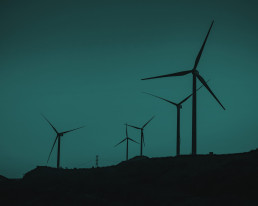
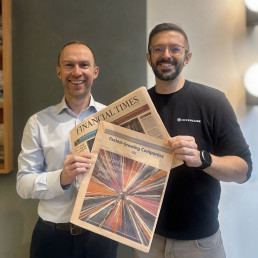
On this episode of the Hypercube Energy Podcast, Adam Sroka speaks with David Robertson, Portfolio Director for Offshore Wind at Nadara, about what it takes to move floating offshore wind from ambition to delivery, and the role Scotland can play in building a new industrial sector.
David reflects on a career that began as an oil and gas apprentice and led through petrochemicals, onshore wind and fixed-bottom offshore wind to his current role overseeing Nadara’s 4.4 GW floating wind portfolio in Scotland. He explains how lessons from offshore oil and gas and early offshore wind projects are shaping today’s floating developments, and why apprenticeships and transferable skills remain central to the industry’s growth.
The conversation looks at the key pressures on delivering floating offshore wind, including consenting, grid connections, ports and supply chain capacity. David also discusses how developers balance technology risk, why safety by design is non-negotiable and how industry collaboration is helping projects move faster. The discussion also considers how digital tools, AI and digital twins can capture lessons and keep teams safe offshore.

Adam and David discuss:
- Moving from oil and gas into floating offshore wind
- The pillars of delivery: consenting, grid, ports and skills
- Supply chain certainty and balancing technology risk
- The role of digital tools, AI and digital twins
- Scotland’s opportunity and pathways into the industry
Explore more:
Connect with David Robertson on LinkedIn
Visit Nadara's website
Follow Nadara Offshore on LinkedIn
Explore supplier opportunities at Nadara
CHAPTER MARKERS
Chapter markers
[00:00] Meet David Robertson – Portfolio Director, Offshore Wind at Nadara
[01:21] From oil and gas apprentice to offshore wind
[05:20] Nadara’s move into floating offshore wind
[08:14] Learning lessons at pace
[10:55] The pillars of delivery: consenting, grid, ports and skills
[15:07] Why certainty matters for the supply chain
[16:30] Balancing risk and locking in technology
[18:42] From demonstrators to gigawatt-scale projects
[21:44] Technology readiness and safety by design
[23:56] Scotland’s opportunity and transferable skills
[26:44] Is there a competitive supply chain yet?
[28:37] Scotland’s edge in floating wind
[30:17] Digital tools, AI and digital twins
[34:27] Working with local communities
[35:42] Innovation in floating offshore wind
[36:50] Energy security and the consumer
[39:32] Pathways into the industry
TRANSCRIPT
Hypercube Podcast Transcript
Title: Safety, certainty and pace: delivering floating offshore wind
Host: Adam Sroka
Guest: David Robertson
Adam Sroka (00:17)
Hello and welcome back to the HyperQ podcast. I’m joined in Glasgow today by David Robertson, who is project director for offshore wind at Nadara. David, thank you for joining us here in not so sunny Glasgow today. How are you? Yeah,
David Robertson (00:32)
you and well thanks.
Adam Sroka (00:34)
very good, very good. Always happy to do these in person and and hear. if I guess people in the audience don’t know who you are, don’t know much about Nadara, do you want to give a brief intro?
David Robertson (00:44)
Yeah, so I’ve been at Nadara for just over four years now. So I joined the company when we entered into the ScotLin projects back in 2022. Been in industry for quite a while. So I’ve been in the renewables industry for around about 21 years now. And before that was about 13, 14 years in oil and gas. So been involved in offshore wind for almost 18, 19 years now as well, of course.
Adam Sroka (01:07)
Does that like it’s one of the s things I wanted to get into later, there’s so much richness in like the offshore experience in Scotland, but how does that colour your personal perspective, like having that that kind of breadth?
David Robertson (01:21)
Yeah, I mean, I’ll go all the way back to when I became an apprentice, I think, to be honest. So that was back in 1992, which obviously wasn’t yesterday. But I joined the oil and gas industry as a very young apprentice, 16, 17 years old. I spent four year apprenticeship and then I moved into petrochemical manufacturing as well. spent about 13 years, 14 years in that industry. Through that time, I actually started my honours degree, which was good, you know, training and developing.
one day a week for five years, which was an interesting way of actually gaining the experience whilst actually training as well. And I spent a lot of time training apprentices, within the oil and gas industry and the petrochemical industry. And, you know, through that, I felt that was a real bedrock of experience for me. So moved from school into an apprenticeship then and to be a tradesman. And then from that, through my honours degree, actually moved into the design engineering department of the company as well. And I think that opportunity was really sort of born in the back of a very, very strong engineering manager that had at the time.
And she really saw something in me that they helped me progress my career. And I look back at the milestones of that career as to how I’ve ended up where I am now. So I ended up in renewables in 2005. Yeah. So yeah. Wow. 21 years ago now. And the project that I was really responsible for is now looking at being repowered. So it’s White Lee Windfarm. So that was ago. So I was electrical project engineer on that project. And before I joined that, it was a Scottish power at the time, the year before I
actually went up to Black Law Wind Farm with my brother-in-law who was a project manager in Scottish Power at the time and I just remember standing at Black Law Wind Farm underneath the turbine looking at it and going, wow.
I really want to have a piece of this. You know, I think it’d be really interesting to get involved in that industry. that really, you know, I looked at the oil and gas industry, petrochemical industry that I’d been working in, and then I looked at renewables and I thought this is really something I want to get involved in. And then a year later, I joined Scottish Power as a project engineer. I joined the offshore wind industry in 2009
I joined taking over my first offshore wind project, Rill Flats, which was 90 megawatts, which seems so small now compared to what we’re looking at, right?
And it was only 25 turbines. And you know, that was one of the early stage projects where there was a lot of things went wrong. We had a lot of good, strong lessons coming out of that. And then you fast forward through the projects through the the Wallany ones and Wallany twos and Borkham Wests was involved in and then some of the more international projects to where I’m now to 4.4 gigawatts of a portfolio development. So, you know, you look at 90 megawatts versus 4.4 in the space of 16, 17 years. It’s crazy. That’s huge. But it’s been really, you know, that path for me to
to Weir Arm now and taking all that experience right from 1992 to to 2026 has been worth it. been golden. think apprenticeships for me, go back to skill sets are really important for the industry. think these projects need people, they need good skill sets as well and without that experience early stage I think I’d probably not be Weir Arm today. I really look at the investment that companies can make in apprenticeships now. It’s one of the best investments they can make.
Adam Sroka (04:24)
That’s amazing. And I think like as parallels to my career, I find that because I was on the tools and deeply technical, it made me a much better manager. It makes me better at understanding like the day-to-day life in the trenches. When you’re thinking about it’s so easy when you’re like looking at a spreadsheet or an organogram and you’re like, right, well, these people do this and these all do this. But then actually imagining like this person’s gonna show up at work and these are the pains they go through and this is why you can’t do that. I think it does add a lot of like value to someone in a position.
But you’ve seen it sounds you’ve seen a a lot across the spectrum of project development as well, from right on the ground through to planning and you’ve seen the pipeline expand. I guess Nadara’s playing like a really pivotal role now in the kind of next phase for Scottish renewables. How do you see like your experience? Like what does it take to go from where we are to full project delivery? Like what lessons can we learn as an industry?
David Robertson (05:20)
Yeah,
mean, think, you know, Nadara has been in Scotland for over 20 years now So, the back in the day, they were called Falck renewables. There’s been an evolution, you know, as obviously through mergers acquisitions, but became became the data and the the only and operate renewables projects worldwide. and they’re one of the top IPPs in Europe. And To be honest, it’s really impressive to see that the portfolio they’ve got in the onshore. They decided to move into the the the floating wind market back in 2022 and it’s a real evolution that, you know,
taking these projects, they’ve got a lot of lessons that they’ve learned on the onshore And I’ve worked on onshore as well in the early days as I’ve mentioned as well, but it’s a completely different ballgame the floating wind industry. So I think the first thing’s first for, know, Nadara really taken that experience and they’re looking at the benefits that floating offshore wind can create for Scotland in particular, and obviously taking those lessons worldwide as well. But you look at the taking these projects from concept through to delivery, there’s a whole set of process. First of all,
when I joined in 2022, the first thing that I was look at the team and look at what I needed.
I needed to recruit the best people into the team. I needed to recruit people that had the skill sets. We actively worked with, you know, obviously consultancies and engineering companies to bring that skill sets in as well. And you mentioned lessons and I think it’s really important to know that, that the lessons learned in this industry is really critical. think, I’ll go back to a very quick story that in 2009, I remember something happened. I won’t go into the details offshore. I’m standing on the quayside and my project engineer at the time looked at
And he said, David, said, 40 years ago, we made this mistake in oil and gas. says, we’re still making some of these mistakes. How do we learn? And you you take those lessons throughout the early stage projects. So we’ve learned a lot in the fixed projects, but learned a lot. But we’re moving straight into a new sector now. And we’re really relying on the experience of the oil and gas experience because people have offshore in oil and gas as well. So we’re drawn upon that and bringing it into the industry as well.
We look at Nadara the offshore business that we have. We’ve got all the skill sets. We’ve got project management. We’ve got health and safety quality. We’ve got engineering construction. We’ve got commercial legal, even operations and maintenance as well. And we’ve brought all that together to make sure that we can develop these projects. think taking them from the concept through to delivery, you know, it can take up to about 10 years. lot of these projects can be 10 years from lease agreement through to development. And there’s a lot of things that we need to do and need to do and need to make sure that we get them right. We need to consent to projects.
first and foremost, but we also make sure that they’re safe, we can construct them, we can operate and maintain them as well of course. And that’s a very complex process which takes time and we’re right in middle of all of that. I think to touch on the consenting process, we’ve already sent our application in for the first project for the wind farm development area. So you know, all going well, we’ll get that through next year as well, but we’re fully in the race now to take that project through to construction in early part of the next decade. So it’s exciting times for Nadara.
Adam Sroka (08:14)
you talk about lessons and learning lessons from the other industry. My my experience of working and talking with people in Offshore Wind is that there’s just so the pace of delivery, the pace of acceleration at which we’re delivering these projects.
Do you actually have the time to get your head out of the BAU to do a deep lessons learned and stuff like that and carry learnings over project to project?
David Robertson (08:36)
The short answer is Pace is everything in this industry right now. think, you know, we, you know, I spoke about the sort of 10 year lease to sort of construction phase, sometimes a little bit shorter. That seems like a long time. It really isn’t. And, know, you’ve touched on a very important point. Do we have time to actually take it back and actually learn the lessons? I think first and foremost, the people that we’ve got have learned a lot of lessons. We bring that experience into what we’re doing. And, know, in the day to day, you know, there’s a lot there that people say, well, I’ve seen that before, you know, and we’re able to use those lessons. But I think we’re using a lot of technology.
We use a lot of and the renewable space there so that we can record, can then reflect back on it. We use a lot of AI now, which is quite interesting. That’s quite an interesting piece that we’re using so that we can then learn, record lessons and make sure that we’re into the new projects as well. Do we have time? A lot of the time it does feel like you’re operating at full tilt. But I think there is that benefit that me personally as a PD in these projects, I’m able to take that step back. The team are very busy, but we’re able to take that step
back and just take a breath. You know, we do have times within the projects that we can take that breath and just make sure we’re doing things correctly. I mean, first and foremost, safety is everything in these projects. We need to make sure they’re safe. We need to make sure we’re following all the consenting regulations as well. We also need to make sure they’re bankable. know, there’s so many different levers here that we need to make sure we’re doing everything right. The business case needs to stack up and we need to be able to build them safely and operate them safely over the lifetime of the projects as well. So we need to make the time and we need to take that time.
So we need to make space to make sure we get it right.
Adam Sroka (10:09)
It’s interesting to hear. Yeah, because I I actually think that is one of the big promises that AI can deliver in industries like offshore wind. It’s the capture and manufacture of the insights, the value that like you know, you should be writing this down in a log, but maybe you just never do because actually there’s always a fire somewhere to go and put out. Like I actually think in i it parallels in the data modeling world, like the semantic layer and all this knowledge graph, it
It’s very powerful stuff if you’ve got the time to do it. No one’s got time to do it. And actually now we might be finally in a world where you ca you can reap the benefits of that automation. But I guess like other than pace of delivery, I suppose, like uncertainty, what are the big pressures and the bottlenecks in project delivery?
David Robertson (10:55)
Yeah,
I the best way to describe it, I always go back to, you know, I like to talk a lot about pillars and things that really important to keep the roof on the floating wind industry. You know, you look at the key pressures that we’ve got, first and foremost, a lot of these projects where we are now, I fully believe we’re at an inflection point within the industry. So many projects now that are coming through the pipeline are now putting their consent application in. And, they’re obviously going through the design process as well. So the first pillar I look at is the consenting the regular
part of it. We need to get that right and you know we as developers need to make sure that we have the most robust consent application. we need to have made sure we’ve done all the diligence, we’ve done all the surveys, we’re taking cognizance of all the requirements for that consent application. We submit that into the system. We look to try and get a quick turnaround on that. When I say a quick turnaround, a minimum.
12 months, turn around on that application. We try and get that through as quickly as we possibly can. And that’s one of the pieces that Scotland has within its wheelhouse is that Scottish government are responsible for the consent applications and the review of them. So we need to submit that and make sure that that’s as robust as possible. We get that through. The second part is obviously grid, grid connections. Everything works back from the grid connection date. So as an old grid engineer, back in 2005 when I was working on
some of the onshore projects, I was working in grid. So I’ve got a lot of empathy for the challenges that the grids are facing. We need to make sure that they turn up on time to make sure we can connect on time. So when we take our grid connection dates from the early 2030s to back to where we are now, it’s all got to fit in to make sure we’re ready to build and connect to that. So they need to make sure we turn up on time as well, of course. So there’s that fine balance.
So we’re actively working with the grid companies and we’re obviously communicating quite regularly with them through the grid connection process as well. We then look at ports infrastructure. I think that’s really something that we’re making a huge headway on now. That’s definitely gonna be a capacity constraint, certainly in Scotland. I there’s not enough ports to support all the projects if they all come through. But bear in mind, they’re not all coming through at the same time. They are phased as well.
you know there’s going to be a bit of capacity that we need to look at for the ports as well but they’re making a lot of developments in ports. You look at the port of Ardysseer, mean the work that’s going on up there, I you can see Ardysseer from the moon right, it’s huge, it’s absolutely massive. It’s really impressive and all the other ports are starting to come online as well which is great. You know and then you go back to all the way back to what I’ve been talking about in skills, you need to have the right people. So I think we have…
Certainly within Nadara we’ve got a really good strong team that we’ve got. We’re starting to build that team up further as well. We expect and hope to see all the supply chain companies coming along and having the skill sets that we require to develop and build these projects out for us as well. So we’re looking to try and support these supply chains and give them access to not just the tier ones, know, there’s tier twos, two threes, tier threes and tier fours. Make sure that there’s an ecosystem that they can actually meet within as well. You know, my sort of
I guess my vision and hope for Scottish companies is that they get involved in offshore wind and floating wind as much as they possibly can. And you know, I’m really hoping that the projects we are developing give them access to that as well. there’s a number of barriers I’ve mentioned there, but they’re starting to come down, they’re starting to smooth out a lot quicker. And I think turning the ambition that we had in 2022 for Scotland into that full activity credibility
and certainty is really key because all of that then brings all the investment as well back into Scotland. creates jobs, it creates economic growth, and that’s only a good thing for Scotland. And The way I look at it is we’re creating an industry that 10 years from now, we could expand that into the international market. So what we’re learning now and what we’re doing, any country with a coastline will benefit from what we’re doing right now.
Adam Sroka (14:45)
Yeah. I mean, it’s it’s an interesting thread of concerns. There’s so much balancing of uncertainty that you’ve got to do and someone does have to like wade through the barriers to try and knock them down for everyone else. But the opportunities are there. I think was it you that was saying that like on the bottlenecks, like there’s actually just only so many ships that can deliver some of the stuff. It doesn’t matter what you do, like yeah, you’re not unless you start a shipbuilding company.
David Robertson (15:07)
Yeah.
And that’s a balance. mean, think this is where, you know, certainty is everything for supply chain. So I think that, we’ve been developing these projects for four years now. The good thing is the certainty is now starting to be created by the of projects. The projects are coming through their development pipeline. They’re coming through the consent application process. A lot of the projects this side of the decade that we’re going through the CFDs as well, you know, the next couple of years as well. That creates certainty. That creates certainty for the, as you mentioned, the shipbuilding company.
the supply chain companies, the engineering fabricators, and the OEMs. And I think at the moment, know, where there’s been a lot of uncertainty, and we’ve been through, I guess, a little bit of turbulent couple of years up until now. But because we’re now coming through that, we’re seeing the more certainty. A lot of these supply chain companies can now hang their hat on more certain these projects are going to be delivered when they expected to deliver them as well. And we as developers, we need to also gain that certainty from these companies to make sure we can lock in supply chain slots, fabrication slots.
and as you mentioned vessels but also you know the design and the fabrication of floating systems as well and turbines. We all need to make sure all that lines up so it’s quite a complex sort of program of works and they all need to fall in line but you know we’re doing everything that we can and we fully understand the program that we’re working against so part of our job is to put all that together because without the projects and without the certainty in the projects a lot of that falls away.
Adam Sroka (16:30)
At what point as like project director do you because like you can’t get rid of all the uncertainty, right? So at what point do you just go, right, that’s enough. We’re just gonna have to take a punt? Like what like how do you know that you’ve you’ve got there? Because you you could always do more, right?
David Robertson (16:43)
balanced risk I think is the best way to describe it.
I always look at the programs that we’ve got across the whole portfolio and I always, I use the term trying to remain as dynamic as you possibly can. So we take things up to a point, know, and there’s certain milestones, know, consensus key milestone, obviously, CFDs key milestones as well. Grid connection being another major milestone within the life cycle of the development and construction as well. There’s elements there that sometimes we need to pivot, you know, between different technologies, in the early days, we’re starting to lock all that in, but we do,
Safety is number one priority for us and I think we’ll never negate safety for any reason whatsoever. So we do a very strong safety by design process to make sure we’re selecting the right technology. But we’re also on the page that we work very closely with the supply chain that we don’t lock in too early so we’re locked in to a certain technology too early just in case something changes. But there is a time, and it’s coming very soon for a number of projects in Scotland in particular, where they need to lock that technology and they need to make that step.
We take a balance on that and I think for me it’s been as dynamic as we possibly can to make the right decisions at the right time and if something changes then we can pivot to something else with minimal impact and that’s something we balance on on a daily monthly basis in the programme.
Adam Sroka (18:01)
but like it must be super hard, right? Because you talk about 2022. Like, do you not f I like in the world of wind and actual big tech, right? Like not not like Silicon Valley big tech, but like big things, like rotating machinery, right? Four years isn’t very long. Like that’s it’s actually lightning fast. Like it’s not been that long this has been happening at all.
So fast forward ten years, like the pace of change, even of just the underlying technologies. I’m glad you touched on the point of like we might as an industry have to lock in and that will have cascading impacts on the rest of the supply chain and things. But where do you think how do you go from like it’s gone from demonstrator to this, like in in record time, really?
David Robertson (18:42)
Yeah, I mean, think four years is quick. I’ve been here four years and sometimes it feels a lot longer than it is four years, but sometimes it feels like the blink of an eye. But you’ve got to remember that we’re evolving and innovating an already established industry. So, you know, we’ve been offshore and offshore fixed for a number of years and, we’ve made a lot of mistakes, we’ve learned a lot of lessons. We’ve also been through a lot of the processes in the development phase of these projects. So we understand the processes that we need to go through.
consenting these projects, that’s quite a standard process we need to go through. We understand what we need to do to develop these projects and consent them. The design and engineering is slightly different compared to fixed, we’re on floating technology, but floating structures are relatively proven technologies now. You mentioned demonstrators, that there’s a definite path taking safety as a number one priority, right?
We look at design between the four years of development. We look through the design over the next three or four years. We then go into construction two or three years after that. And you look at how you take that through the pathway. Safety by design being something we’ve already learned a lot of lessons from the demonstrator projects. This side of the decade, I hope, as Scotland PLC, as an advocate for Scotland PLC, I really hope we see some of these three to 500 megawatt projects coming through.
There’ll be lessons learned on those projects. Absolutely. But they really, pardon the pun, but they provide a good strong foundation as well to then create the, I mean, we’re going into 1.8 gigawatts for the first project, the early part of the next decade.
So, you know, we are actively working together with supply chain. we do a lot of collaboration with other developers as well. I sit in the Scottish offshore wind energy council And we collaborate together with a lot of other developers, you know, and there’s a lot of good sharing. I like to call it a co-opetition. Yeah, yeah. Competition, but we do a lot of collaborating as well. So there’s a lot of sharing of information And it’s for the benefit of the industry as well. the pace that you mentioned, yes, that is quite fast, but we’ve already got a lot of lessons and lot of that skill sets and experience that we’ve had.
in the fixed industry, which helps us move into the floating industry pretty quickly as well. And as I mentioned before, we’re taking a lot of that offshore experience that we’ve already gained, not just from the fixed industry, but from oil and gas as well to help us get there a lot quicker as well and get there as safely as we possibly can.
Adam Sroka (21:03)
Yeah,
that’s I think that’s really interesting because it like I always that that cooperation piece, I always think it’s like airline safety. It’s like there’s not really a competitive advantage. There’s a best way of doing it and we all do it, and that’s that. Like and everyone benefits from that. But as an industry, like I just think it moves so quickly, there’s so much happening. I wanna touch on Scotland’s role, but like the thing that just whilst we were talking, I was thinking
With new technology, a lot of it’s proven, I g I get that, but there must be elements in the consenting process or whatever where you get asked like you get asked a clarification question and you just go, No one knows yet. Like I dunno, like no one knows. We’re the ones that are figuring this out. Like, sorry, like that like we’re just
David Robertson (21:44)
We do. We get that. mean, I think, you know, back in the sort of early days, floating structures, were so many different structures, right? And, you know, what we’ve seen is the natural evolution of coalescing around certain types of floating foundations as well, which is good. That gives a lot more certainty of the turbine suppliers as well. Also gives a lot more certainty to the developers and the designers as well. And, you know, but we do have, you know, safety by designs, something that I’m, you know, I’ll bang the drum
until the cows come home in this one about safety by design. But we’ve got a design development process that we’re really strict and following through the technology readiness levels. know, we are down selecting technologies based on what’s available now in the market versus where they’re going to be in the market versus, you know, what’s a tank test, what’s got demonstrator projects, which ones have maybe even got commercial scale projects as well. So there’s a deliberateness of our approach to make sure we select the right technology for the project. And, it’s not to say that, you know, ideally we’d want the same technology, same
turbines across all the projects in the portfolio. But turbines will get bigger. Foundations will maybe change designs, will maybe innovate, et cetera, et cetera. But we take what we know, given that the time. And you’re right, know, people have said to me, what do you think of? Not right now. It’s just not going to be ready for our projects. Because we need to make commercial decisions based on whether it’s going to be safe, whether it’s going to be to be constructed, whether we can operate it as well. we do follow a very strict path in that process. And you mentioned airlines. It’s interesting that technology is actually helping us.
create that sort of pathway of quality control and traceability so that, know, God forbid anything was to happen in the future, we know exactly why we made a decision, when we made it and the reasons behind that decision as well.
Adam Sroka (23:24)
Yeah, and you can all benefit. And I think like that that selecting maybe less proven technologies, there’s a optimization and opportunity for one of the smaller developers to go and do something novel and innovative. And so like we we’ve touched on look, you’ve like apprenticeships, we’ve touched on expanding the supply chain, the role for smaller developers, Scotland PLC. Like what’s the the forecast? Yeah, labour ecosystem? And how many are like how many new, new non energy kind of people?
people can we drag in to to this space?
David Robertson (23:56)
Well, mean, first and foremost, Scotland, the opportunity is huge, right? So I think, you know,
looking at where Scotland is right now in terms of the development pipeline, where we’re going to be in 10 years from now. We’re creating a new industrial sector and I can’t tell you passionate I am about being part of this. I think it’s really important that we build that new sector, we bring in all these skill sets, we give access to the full life cycle of companies within Scotland. There’s so many different supply chain companies that can get involved in these offshore wind projects. The developers will deal with tier one.
You know, EPC contractors will deal with tier twos, et cetera, as well. But we need to open that door to all these other companies as well. So we are actively engaging with the tier ones, tier twos. And we’re also engaging with a lot of these companies as well to make sure they understand where they can access the projects as well. But for non-energy people, you know, I think, to be honest, you know, it’s interesting that if you look at an organization, least a bog standard organizational chart for an offshore wind project, you’ve got health and safety. Health and safety is everywhere.
You’ve got quality everywhere, quality management, fabrication, quality control systems. You’ve got engineering. Now, engineering, if you look at the engineering that I used to do in the oil and gas sector, I mean, we weren’t in renewables, but it’s directly transferable. You look at commercial managers, you look at quantity surveyors, whether in construction, et cetera. You look at lawyers. There’s legal opportunities for lawyers to get involved. Construction lawyers can get involved in any construction project.
you know, operations and maintenance, inspection, repair, maintenance, the opportunities are huge. So we don’t want to just say, that this is just for energy people, there’s manufacturing, there’s fabrication, there’s different adjacent sectors that can get involved. If you look at the instrumentation and control systems that I was involved in my early days, SCADA systems, know, automation, et cetera, people can get involved in renewables as well. So it’s all directly transferable. So, you know, people are interested and they want to transfer.
There’s roots to market for them to come into this industry, absolutely.
Adam Sroka (25:55)
Yeah, look, I’d back that up like as someone that I did laser physics, right? And so much of what I did of microcontroller processing, like finite element analysis, physics on stri University of Strathclyde computers translated directly over into modeling energy systems, forecasting, all that stuff. And it’s a great way to bring people in and like
These projects aren’t aren’t going anywhere. They’re not like flashing the pan. It’s not like crypto, I mean, or NFTs. Like they’re gonna here for a good ten years plus. Like you you can build a career out of this and it’s a an exciting place to work. do we is it too early, like because of the pace of change and and some of the the foundational kind of forming stuff that’s going on, is it too early to have a truly competitive supply chain in this space? Or are we are we seeing that in the elements of what we’re doing?
David Robertson (26:44)
Yeah,
I mean, I mean, I think really, you know, it depends on what part of the supply chain you’re really looking at, to be fair. You talk about the main equipment, yeah, the manufacturers, you’ve got substations, you’ve got turbines, you know, there’s obviously fabricators, etc.
there’s probably not as many of them as we would like. We like to have quite a bit of competition, I think. But for the tiers below, the tier ones and tier twos, absolutely. I mean, think there’s definite space for these companies to start to get involved and actually compete.
commercially and viably as well, think, to be honest. I think we really need to have as many companies involved in this, you know, and to be fair, it’s not all about the best price. It’s about having the best company that can deliver the projects for you and deliver that service for you as well. So I feel, yes, absolutely, that I think we…
In terms of earnliness, in terms of where we are in the life cycle, as I mentioned, most of the projects are now coming through the consenting phase of the project. They’re really moving into the real strong design, engineering, front-end engineering design phase of the project. So there’s a lot of opportunity for a lot of these companies to be involved as part of that life cycle and see where they can get involved through the tier ones and tier twos as well. So I believe there is a real competitive landscape for companies to now really look between now and end of the decade to really get involved in floating wind, absolutely.
Adam Sroka (28:01)
And it’s interesting, because we talk about oil and gas and like offshore skills. And I think people sometimes myself included, I just can’t help but imagine like someone sat on an oil rig and an oil and gas engineer. But actually, that industry is wrapped in secondary like lawyers and like secondary service providers, tertiary businesses. And actually, look at the city of Aberdeen, right? You’ve got like a whole city that’s helped.
born and spin up this really, really strong industry. Does that give Scotland like an unfair advantage, this edge in doing more in this space that would be hard to replicate like somewhere else?
David Robertson (28:37)
Yeah, I mean, think, you know, take, take Aberdeen as a, as an example, I think they do have an edge in terms of, the skill sets already exist within, within the city of Aberdeen and, and obviously around, around other parts of Scotland as well. So it gives, it gives a real edge to sort of walking into the offshore floating wind industry and the fixed industry as well. I think we’re already seeing a lot of companies transitioning from, you know, taking skill sets, getting involved in the development and obviously the, the design and engineering part of these projects as well. There’s a lot of companies in
in particular, I’ve got this oil and gas heritage and this huge experience of being offshore. You you take one person from an oil and gas platform, you put them on a substation. know, lot of the offshore substation, the primary steel, secondary steel, the equipment that’s on that has already been provided by a lot of the companies that exist within UK and Scotland in particular as well. So I think, yeah, maybe not an unfair advantage. I like the term edge. think they do have an edge, but…
notwithstanding there are a lot of towns and cities around about the UK where a lot of these skill sets can be transferred into the floating wind industry as well and I see that being a real advantage for us.
Adam Sroka (29:45)
Yeah, it’s exciting just to see how it all naturally progresses. And I think like you could definitely tell when you’ve you you’ve got someone with that level of experience, someone that’s been doing this for like 40 years in the in the team. You can yeah, you you get like a comfort from it, I think. And an interesting side, and I’d it’d be remiss of me not to ask, but what about like the digital side, the software side? Because I am biased. But I think I I I actually think like most of the energy sector has been poorly underserved by good software for a long time. How are you seeing digital tools and the digital
digitisation of offshore wind.
David Robertson (30:17)
Yeah, I mean, first of all, I love it. think it’s amazing. know, the invention of AI has been so quick. think, you know, technology is moving so fast. we use a number of tools. I’ve mentioned the WindSafe and then Vindai in previous conversations with you as well. think WindSafe in particular is one of the software pieces that I really like because it’s this sort of health and safety ecosystem that we’ve got. gives you lessons, it gives you training, it gives you access to, you know,
recording accidents, incidents and making sure you learn those lessons as well. And it really people are people right, you as you mentioned earlier on in the conversation that trying to remember all of this information, it’s quite difficult. don’t remember everything because everything they’re having to do on a daily basis. So
The technology is really helping with that and it really helps us stay at the front end and make sure that we’re on our toes all the time. I think using the technology piece, I like the software pieces like Vindy Eye in particular because energy yields for us, obviously how much energy we can capture from these turbines is really important to make sure we generate the power correctly with the full power from the turbines.
It’s to take a good number of weeks to get them done. We’re shortening that time scale now. So the faster we can do it with really up-to-date information really helps us move at pace. I think also digital twinning, the one thing we, we always need people to go offshore to do inspection, repair, maintenance after these projects are constructed. But even through the construction phase, if you can model that and model
things that might go wrong before you even put anyone into that space. That’s worth its weight in gold. That really helps us understand it before we put any equipment offshore.
Adam Sroka (31:57)
Yeah, I I feel like digital twinning was so popular about five, six years ago and it’s it’s not as it’s not as kind of hyped now. I think AI’s taken over, but some of the stuff you can do, like exactly, and when when you put the health and safety lens on it, it’s just a no brainer to go away and do that stuff. And the fact that it’s repeatable, and much like the skills in the infrastructure that support the oil and gas industry.
you can cascade that advantage through to other projects and keep like using those skills and that that’s not like a one-off investment that seems eye-watering the time if you amatize it over the life of a portfolio.
David Robertson (32:30)
Yeah, without a doubt. I think that, you you look at all of that and bring it all together and you take it back to the individual, you know, that we talk about skills, individuals need to have the right skills, but put someone on an oil and gas platform or an offshore substation. And, you know, there may be new equipment. They may be quite new. Can you imagine using the digital glasses that brings up drawings, that brings up different process drawings or equipment drawings that this individual can use even on the iPads, this type of thing that
just to know what they’re looking at, they’ve got up-to-date information to communicate back to the shore side as well. Absolutely worth its weight in gold. So I’m all for it. think, you know, the more we do it and, where we are right now, you know, AI’s, I won’t say it’s in its inception, it’s way beyond that now, but six months now to 10 years from now, it’s endless.
Adam Sroka (33:18)
Unimaginable. Yeah. Yeah. It’s a really exciting time. I mean, some of the stuff like we we’re producing a hypercube. it’s funny that one of our most popular modules is our procurement assistant. And I often joke that it’s like no one’s written a piece of software for procurement people for about thirty years. And so they’re actually just amazed to see something that doesn’t look like it’s Windows ninety five and it’s got like a translucent window on it because like no one gives them any love. But you
Again, if you go in with the right mindset and you show them this is an accelerator, not a replacement for your skill set, allow them to do the value add, the clever part of their work much, much faster and at much greater scale, you really start to reap the benefits and everything that I I believe deeply, like everything that chips away at the cost to deliver green electrons is worth doing in the long run. Like, all right, it’s a small small dent we’ll make in net zero, but we’re all kind of on a path together. It’s a really exciting place to be.
Something we’ve not really touched on. We’ve talked talked about Scotland and the impact on the labour market. But what about like locally and like on a community scale? Like there’s there’s real towns and villages with real people that you’re putting investment into via the supply chain and things like that. What how do you see that, Nadara?
David Robertson (34:27)
I think it’s really key to look at the communities that we serve as a developer-owner-operator, that we listen to them, we see them as partnerships. think it’s not just economic value, I mean there’s education, there’s obviously training, development that we can get involved in as well. But really actively listening to what the communities want,
what they’re looking for from these projects as well. It’s quite interesting, know, We’ve really built on the back of these really strong relationships with local communities and the onshore of Nadara and the projects that are operating in Scotland. We’re looking at building upon that for the offshore piece as well. you know, I think that the more we listen and engage with the communities, the more we’ll be able to better serve their needs and what they’re looking for. I think the, as I mentioned, education is really quite key in building. You you look at the education, training and skills.
A lot of the people that live in these communities could be working in the operations and maintenance phase for 20, 30 years. So it’s really important that we keep engaging with them.
Adam Sroka (35:26)
That’s incredible. And it’s just the yeah, again, it’s the secondary, tertiary benefits that that kind of roll out of projects like these. I think it’s a really exciting place to be. What about innovation for the future? Not just AI, but what what across the industry? What do you any sort of predictions or things you’d like to see innovated?
David Robertson (35:42)
Yeah, I mean, you you look at the the way we are, you know, we’re also developing these projects. These turbines and structures need to be out there for 20, 30 years and beyond. I’m really looking at over the next and there’s some really exciting pieces of innovation. know, there’s there’s there’s cable connectors, there’s there’s web connectors, there’s there’s ways of disconnecting the moorings and anchors, etc. So you can you can take these these structures back and back to shoreside. I think there’s going to be a lot of innovation to make sure that these these projects are
easily maintained, that you can take them back to the port a lot quicker and lot faster with safety in mind as well. Probably reducing the amount of time that people need to be on the structures and then taking them back to a safe environment where they can actually repair and maintain them on a port side as well. But where we need to be offshore as well, I see a lot of innovation of getting people on and off the locations as well to carry out maintenance as well. So I think the next 10 years is going to be quite exciting and there’s a lot coming through right now. As soon as we start to build these projects, you’ll probably see quite a lot of these innovations being put on.
these projects and start to get built over the next five to ten years as well.
Adam Sroka (36:45)
do you have any hot takes or controversial opinions that heard it here first?
David Robertson (36:50)
Well, I mean, probably just to reiterate that, you know, we talk a lot about these projects in terms of targets, know, terming numbers, gigawatts, et cetera. I think the most important thing that the consumers are looking at these projects, I think the quicker we can get these projects in the water and generating, the quicker we’re going to see a lot more benefit to the actual consumers.
energy security is a one priority. I see the the floating wind industry being an absolute cornerstone for energy security. I’d like to see over the next 10 years or so we’ll see a boom of energy security, we’ll see cleaner energy as well. I think that that’s going to really be really important to the consumer as well. So if we can try and reduce any delays and getting these projects in the water, think that will happen a lot quicker. And it means that we can then get there a lot faster in terms of energy security and what the consumer is going to see at the end.
Adam Sroka (37:41)
Exciting. How what do you think? AI and data centers are gonna make a dent in that? That gonna ruffle some feathers on that front?
David Robertson (37:46)
I don’t
know too much about data centres but I know they need a lot of power to be honest with you and I think AI will play a part in it. think yes, mean obviously the floating wind capacities that we are putting out will definitely be able to supply power for these data centres and keep them going as well but I definitely see AI becoming quite a stalwart piece of the floating wind industry as we move forward.
Adam Sroka (38:06)
Yeah, I’d love to say I yeah. I think every other day I change my opinion on how that’s gonna play out. So I’ll not answer today ’cause it’ll be dated by the time this is. I think it’s always bad. I’m I’m especially guilty for this, being an energy nerd, to forget that there are people at the other end of this. Because it’s quite I like thinking about infrastructure and wind farms and transmission networks, but actually there’s a point to all this. It’s not just to build loads of cool big machines, but it’s actually to like drive benefits down to
Businesses and people at the other end, like how how do you feel the impact of floating offshore wind can have on the end user, on the consumer?
David Robertson (38:43)
Yeah, mean, I Floating wind in particular, you know, together with the offshore fixed industry as well, it’s filling a gap. It’s filling a gap. You you mentioned AI data centers, you know, there’s a huge draw on energy, but I think the evolution of where we’re going with transport, heating, et cetera, as well, I think it’s really moving towards very quickly towards electrification. The rail networks are all being electrified as well, which I think is really important. Offshore floating wind can fill that gap. I think what it does do is it helps us get a cleaner, more secure energy supply
to the consumer at the end which will eventually see the cost come down.
Adam Sroka (39:18)
Say I’m listening to this podcast, and actually I fall in love with Nadara or Offshore Wind. How do I how do I break in? Like what are the pathways to me as a person maybe starting their career or getting into this or maybe transitioning careers over?
David Robertson (39:32)
Yeah, I think first and foremost, I think, we as Nadara and the industry, you know, part of my job role is to make sure that people can see what we’re doing and get excited about it, I think. So, young people leaving school that are really interested in, finding a pathway into the industry, we need to be able to show them, what the industry is all about. I think there’s some really good opportunities for apprentices, I think there’s a lot of people who leave school, you know, a of people go to university, but a of people, maybe want to find their way into apprenticeships.
Apprenticeships are a really good strong way to get involved. Not only do you get the college education, but you also get the hands-on training whilst you’re doing it as well. And take it from me, you know, I’m an ex-apprentice as well, so I think that’s definitely a really strong pathway to get involved in any part of the industry that you want to get involved in. I think that would be something that’s open to anyone that wants to enter the floating wind industry.
Adam Sroka (40:21)
Yeah, I think I followed like the default path of people at my school and I went to uni and I shouldn’t have gone when I was 18. I should have done something else. And I th I actually look back and I think I’d have loved an apprenticeship, but ended up in engineering anyway. Yeah. I just think I’d have that would have been a good route for me, like the human I was at the time.
David Robertson (40:38)
Yeah, I mean,
I did my apprenticeship, had no idea that wanted to go on and do my honours degree. That was just an opportunity that presented itself through my engineering manager. I mean, I was really pleased to be a technician within oil and gas. I just wanted to get in and about and, you know, design, build and repair and maintain. And I just got a real thirst for learning. And that pathway then really springboarded me into wanting to do a little bit more than move into design engineering as well. But it’s a definite start to anyone that wants to enter the industry. know, apprenticeships are one of the best investments that any
company can make.
Adam Sroka (41:09)
Always like to ask people, why specifically this company? Like there’s loads of opportunities across like a really broad sector. What was it about Nadara that brought you there?
David Robertson (41:16)
Yeah, I think for me it was to come and work for a company that was really passionate about renewables and I’ve got around about 200 wind, solar and storage assets in Northern Europe and across America as well. I thought that was really interesting when the opportunity arose for me to come and develop and build floating projects in Scotland in particular. So I think the heritage that they’ve got on the onshore and the solar piece was really interesting but the next stage is definitely floating and when you look at the 4.4 gigawatts of development we’ve got in Scotland.
Why wouldn’t you be interested?
Adam Sroka (41:49)
Amazing. Look, David, it’s been amazing having you here. Thank you so much for joining us. Before I let anyone leave, I always just like to ask if there’s anything you’d like to promote or plug, or if people want to find out more about you or Nadara, where should we point them?
David Robertson (42:01)
Yeah, I mean, think first and foremost, you can look at our website, you know, nadara.com, you’ll find out what we’re doing globally and all these different projects we’ve got available as well. But follow us on LinkedIn, Nadara Offshore is a really good place to look at what we’re up to. You’ll see a lot of posts, our communications team are always putting information out there as well. And obviously, if there’s any supply chain companies that want to be involved, you know, with the projects as well, register on our supply chain portal, which is really important so that we know that they’re there and then we can communicate with them moving forwards as well.
Adam Sroka (42:30)
Well look, it’s been an absolute pleasure and thanks for joining us here in Glasgow again.
David Robertson (42:34)
You’re very welcome. Thank you for the time. Thank you.
Adam Sroka (42:38)
Thank you once again for listening to the Hypercube Energy podcast. As always, if you have any feedback or comments or you want to get involved, please get in touch. And if you want to find out more about what’s happening in data and AI across the energy sector, please join the Beyond Energy community and I look forward to speaking to you soon.
Do you have something to say about Energy and Data?
We always welcome new perspectives from leaders in the energy, trading and utilities sectors. If you fancy being a guest on the Hypercube podcast, drop us a message below and our team will be in touch.


